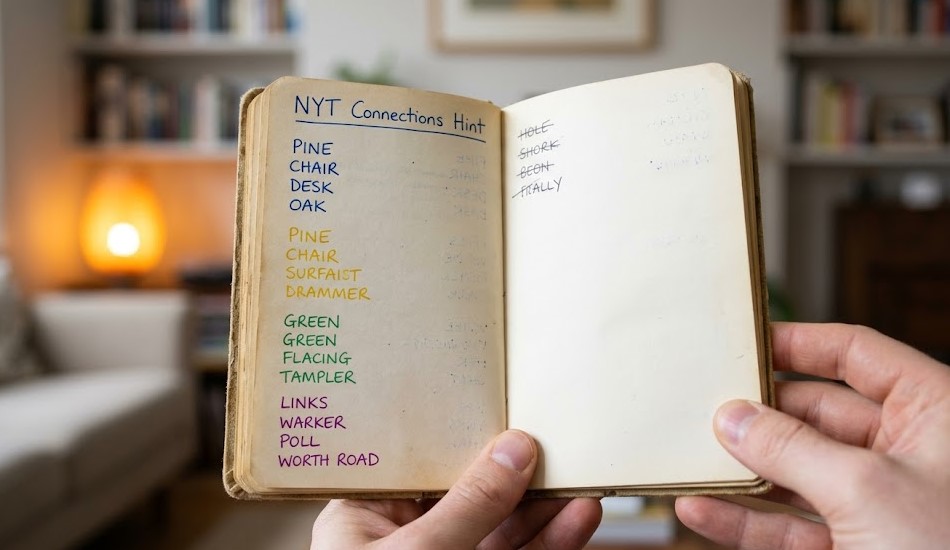
The NYT Connections puzzle is a daily word game created by The New York Times that challenges players to find hidden relationships between 16 seemingly unrelated words. The main objective is to correctly group these words into four sets of four, where each set shares a common theme or connection. At first glance, the words may look random, but each group is carefully designed around a specific idea such as synonyms, cultural references, phrases, or word patterns. What makes the puzzle especially interesting is that the connections are not always direct or obvious, which forces players to think beyond surface meanings and explore different interpretations of each word. Many players find that the puzzle tests not just vocabulary but also logical reasoning and pattern recognition skills, making it both entertaining and mentally stimulating. Over time, it has become a daily habit for puzzle lovers who enjoy the challenge of decoding hidden relationships within language and improving their analytical thinking abilities through consistent practice.
Why Players Search for “nyt connections hint”
Many players search for nyt connections hint because the puzzle is intentionally designed to be tricky and sometimes misleading. Even experienced solvers can get stuck when words appear to belong to more than one possible category. This uncertainty often leads players to look for small hints that can guide their thinking in the right direction without fully revealing the answers. The goal is usually to avoid breaking a winning streak or to save time when the puzzle becomes too complex to solve quickly.
Another major reason for searching hints is the psychological satisfaction of staying consistent with daily puzzles. Connections is not just about solving words but also about maintaining progress over time. A single mistake can reset a streak, which motivates players to use hints as a safety net. Additionally, many users enjoy learning new patterns and word associations through hints, as it helps them improve their skills for future puzzles. This combination of challenge, curiosity, and competition makes hints an essential part of the Connections experience for a large number of players.
How Daily Hints Work in Connections
Daily hints for nyt connections hint are designed to guide players without directly revealing the full solution, keeping the puzzle challenging while still helpful. These hints are usually presented in a layered format, starting with very general clues and gradually becoming more specific. For example, a hint might first suggest a broad theme like “types of movement” or “words related to cooking,” allowing players to think in the right direction without immediately knowing the exact word groups.
In many cases, hint providers also structure clues based on difficulty levels, such as easier categories first and harder ones later. This approach mirrors the game’s own internal color system, making it easier for players to prioritize which groups to solve first. Some hints may even point out tricky wordplay or misleading associations to prevent confusion. The purpose of these daily hints is not to spoil the game but to enhance the solving experience by helping players recognize patterns they might otherwise miss, especially when the puzzle becomes unusually complex.
Understanding Categories and Color Difficulty System
The NYT Connections puzzle is built around a clear but cleverly hidden category system, where every group of four words belongs to a specific theme. What makes the game challenging is that these categories are not revealed directly, so players must discover them through logical thinking and pattern recognition. Each puzzle contains four distinct groups, and identifying the correct grouping is the core challenge of the game. The themes can range from simple everyday concepts to abstract ideas, cultural references, or even wordplay tricks that require deeper thinking.
To make the experience more structured, the puzzle uses a color-coded difficulty system that helps players understand how challenging each category is. The yellow group is usually the easiest and most straightforward, often involving simple and familiar connections. Green is slightly more challenging but still fairly logical. Blue requires stronger vocabulary or cultural understanding, while purple is the most difficult and often involves clever wordplay or hidden meanings. This system not only organizes the puzzle but also guides players on which groups to attempt first, making strategy an important part of solving the game effectively.
Smart Strategies to Solve Connections Faster
Solving the NYT Connections puzzle efficiently requires more than just vocabulary knowledge; it demands observation, patience, and strategic thinking. One of the most effective approaches is to start by scanning all 16 words carefully and identifying any obvious patterns or familiar groupings. These are often the yellow or green categories, which tend to be more direct and easier to recognize. By solving these first, players reduce the complexity of the remaining words and make it easier to spot hidden connections later in the puzzle.
Another useful strategy is to avoid rushing into guesses too early. Random attempts can lead to mistakes and reduce available chances, making the puzzle harder than it needs to be. Instead, experienced players recommend thinking in terms of themes rather than individual word meanings. For example, a word might not seem related at first, but could belong to a category based on usage, idioms, or cultural context. It is also helpful to save the most confusing words for last, as they are often part of the purple category, which usually involves trickier wordplay or abstract associations. Over time, these strategies help players build stronger pattern recognition skills and improve their overall success rate.
Common Mistakes Players Make
While playing the NYT Connections puzzle, many players make simple but costly mistakes that can make solving much harder than it needs to be. One of the most common errors is grouping words based only on surface similarity. At first glance, certain words may appear related, but the puzzle often hides deeper or less obvious connections. This leads players to form incorrect groups that break their solving flow and reduce confidence as the game progresses.
Another frequent mistake is overthinking every word instead of looking for clear patterns first. Some players assume every connection must be complex, which causes them to miss the easier yellow or green categories. Others rush into random guesses without fully analyzing all 16 words, which can quickly waste attempts and limit future options. In many cases, ignoring alternative meanings of words is also a problem, since many puzzles rely on double meanings, idioms, or cultural references. Avoiding these mistakes can significantly improve accuracy and make the solving process smoother and more enjoyable.
Best Sources for Reliable Connections Hints
Finding trustworthy help for nyt connections hint is important because not all sources provide accurate or useful guidance. The best hints usually come from well-known puzzle and tech websites that specialize in daily word games and logic challenges. These platforms focus on giving structured clues that help players think in the right direction without revealing full answers, maintaining the balance between challenge and support.
Reliable sources typically include established gaming blogs, news-based tech sections, and official puzzle-related platforms. These sources are preferred because they follow consistent formats such as category-based hints, difficulty breakdowns, and progressive clues. Some also offer community discussions where players share strategies and interpretations, which can be helpful for understanding difficult puzzles. Using dependable sources ensures that players get fair guidance while still enjoying the satisfaction of solving the puzzle on their own, rather than relying on full spoilers or incorrect interpretations from less credible websites.
Conclusion
The popularity of nyt connections hint shows how deeply engaging the NYT Connections puzzle has become for players around the world. It is not just a simple word game but a daily mental exercise that tests pattern recognition, vocabulary awareness, and logical thinking. The puzzle’s clever design, combined with its hidden categories and increasing difficulty levels, makes it both challenging and rewarding for regular players.
Using hints wisely can significantly improve the solving experience without taking away the enjoyment of discovery. They help players understand tricky word relationships, avoid common mistakes, and maintain their solving streaks. However, the real satisfaction comes from gradually improving your ability to recognize patterns on your own. Over time, consistent practice with or without hints can make solving Connections faster, easier, and more intuitive.
FAQs
1. What does “NYT Connections hint” mean?
It refers to clues or guidance that help players solve the daily NYT Connections puzzle without revealing the full answers.
2. Is using hints considered cheating?
No, using hints is not cheating. It is a common way players understand difficult categories and improve their solving skills.
3. Why is the purple category the hardest?
The purple category often involves wordplay, slang, or abstract connections, making it less obvious than other groups.
4. Can beginners solve NYT Connections without hints?
Yes, beginners can solve it, but hints can make it easier to learn patterns and improve faster over time.
For More Visit guideitfast.com