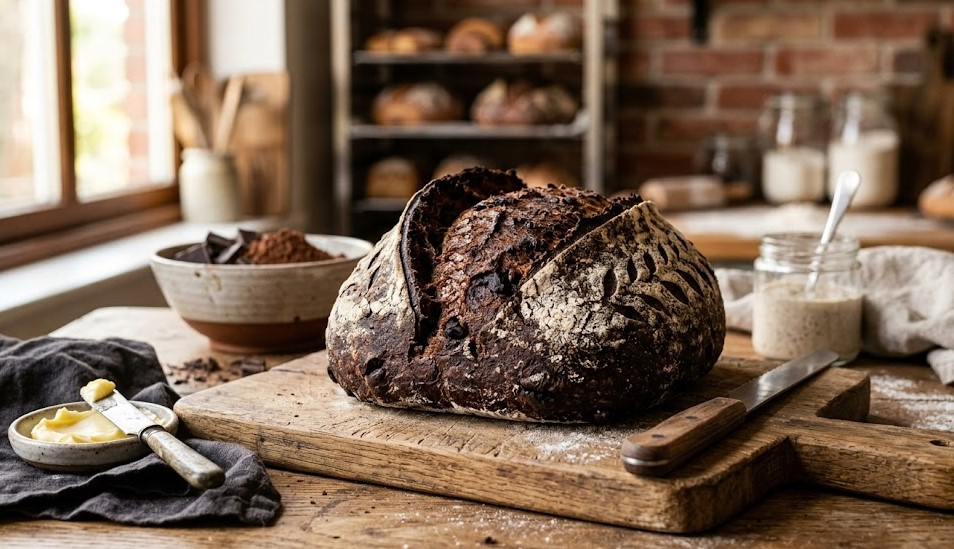
Chocolate sourdough bread stands out because it combines the deep, slightly bitter flavor of cocoa with the naturally tangy taste of traditional sourdough. Unlike regular sweet breads or chocolate cakes, it is not overly sugary. Instead, it offers a balanced flavor profile where the richness of chocolate blends with the earthy complexity created through fermentation. This makes it appealing to people who enjoy artisan-style baking with a more sophisticated taste.
Another defining feature is its natural fermentation process. The dough is made using a sourdough starter, which contains wild yeast and beneficial bacteria. This long fermentation process develops a chewy texture, improves aroma, and enhances the overall depth of flavor. When cocoa or chocolate is added, it interacts with the fermentation process and creates a layered taste experience that feels both rustic and refined at the same time.
Key Ingredients That Define Its Flavor
Chocolate sourdough bread relies on a simple set of ingredients, but each one plays an important role in building its unique flavor and texture. The foundation is always a strong sourdough starter, which provides natural fermentation, structure, and the signature tangy taste. Without a healthy starter, the bread cannot develop its characteristic depth or airy crumb, making it the most essential component in the recipe.
Along with the starter, high-quality bread flour is used to create a strong gluten structure that supports the long fermentation process. Cocoa powder is another key ingredient, giving the bread its rich chocolate flavor and dark color. Some recipes also include dark chocolate chunks or chips to add pockets of melted richness throughout the loaf. Salt is used to balance flavors, while a small amount of sugar may be added to slightly enhance the chocolate notes without making the bread overly sweet.
Step-by-Step Fermentation Process
The fermentation process is the heart of chocolate sourdough bread and what gives it its distinctive taste and texture. It begins by mixing the sourdough starter with flour and water to form a rough dough. This mixture is then left to rest, allowing the natural wild yeast and bacteria to slowly activate. During this stage, gluten begins to develop, and the dough starts building structure without any commercial yeast.
After the initial rest, the dough undergoes a series of folds over several hours. These folds strengthen the dough and help trap air, which is essential for a light and airy crumb. The long fermentation time—often ranging from 8 to 24 hours—allows flavors to deepen significantly. When cocoa powder is included, it blends into the fermented dough, creating a rich, slightly tangy chocolate aroma that intensifies over time.
Baking Techniques for Perfect Texture
Baking chocolate sourdough bread requires careful attention to temperature, timing, and steam to achieve the ideal crust and crumb. Once the dough has completed its final proofing, it is usually baked in a preheated Dutch oven or heavy baking pot. This enclosed environment traps steam, which helps the bread rise properly in the oven and develop a crisp, glossy crust. Without steam, the loaf may turn out dense or unevenly baked.
Temperature control is also crucial for success. The bread is typically baked at a high initial temperature to create oven spring, then slightly reduced to ensure the inside cooks evenly without burning the crust. Many bakers score the dough before baking, allowing it to expand in a controlled way and create beautiful patterns on the surface. This step not only improves appearance but also helps the bread rise more effectively during baking.
Common Mistakes and How to Avoid Them
One of the most common mistakes when making chocolate sourdough bread is using an inactive or weak sourdough starter. If the starter is not properly fed and bubbly, the dough will not rise well, resulting in a dense and heavy loaf. To avoid this, bakers should ensure their starter is active, well-fed, and passes the float test before mixing it into the dough.
Another frequent issue is incorrect hydration or overmixing the dough. Too much water can make the dough overly sticky and hard to handle, while too little can lead to dryness and poor crumb structure. Overmixing can also damage gluten development, affecting the final texture. Additionally, rushing the fermentation process is a mistake many beginners make. Sourdough requires time, and cutting it short often results in underdeveloped flavor and poor oven spring.
Health Benefits of Sourdough-Based Chocolate Bread
Chocolate sourdough bread offers more than just flavor—it also comes with several potential health benefits due to its natural fermentation process. The long fermentation time helps break down gluten and phytic acid in the flour, which may make the bread easier to digest for some people compared to regular bread. This process also allows nutrients in the flour to become more bioavailable, meaning the body can absorb them more efficiently.
Another benefit is its lower impact on blood sugar compared to many refined baked goods. While it still contains carbohydrates, sourdough fermentation can reduce the bread’s glycemic response. When cocoa powder is added, it also brings antioxidants naturally found in chocolate, which are known for supporting overall wellness. However, it is still important to enjoy it in moderation as part of a balanced diet, since it remains a carbohydrate-rich food.
Serving Ideas and Storage Tips
Chocolate sourdough bread can be enjoyed in many simple yet creative ways, depending on the time of day or personal taste. For breakfast, it pairs beautifully with butter, honey, or nut spreads, enhancing its rich cocoa flavor. Some people also enjoy it toasted with cream cheese or mascarpone, which balances the slight tanginess of the sourdough with a creamy texture. For a more indulgent option, it can be served with fresh berries or banana slices to add natural sweetness.
Proper storage is important to maintain freshness and texture. Once fully cooled, the bread should be stored in a breathable cloth bag or wrapped loosely in paper to preserve its crust while preventing it from drying out too quickly. It can stay fresh at room temperature for a few days, and for longer storage, slicing and freezing is a good option. When needed, slices can be toasted directly from the freezer to restore their texture and flavor.
Conclusion
Chocolate sourdough bread is a creative blend of traditional artisan baking and rich cocoa flavor that offers a unique experience for both beginners and experienced bakers. Its naturally fermented base gives it a tangy depth, while cocoa adds a subtle bitterness and richness that makes every bite more complex and enjoyable. Unlike overly sweet baked goods, this loaf maintains balance, making it suitable for breakfast, snacks, or even gourmet pairings.
What makes this bread truly special is its slow fermentation process, which enhances both texture and flavor while also improving digestibility. From choosing the right ingredients to mastering fermentation and baking techniques, each step contributes to the final result. With patience and practice, anyone can create a bakery-style loaf at home that feels both rustic and refined.
FAQs
1. Is chocolate sourdough bread sweet or savory?
It is mildly flavored with chocolate but not overly sweet, making it closer to artisan bread than dessert.
2. Can I use regular yeast instead of sourdough starter?
Yes, but it will lose the signature tangy flavor and fermentation benefits of sourdough.
3. What type of chocolate works best?
Unsweetened cocoa powder and dark chocolate chunks are commonly used for a balanced taste.
4. How long does chocolate sourdough bread stay fresh?
It stays fresh for about 2–3 days at room temperature and can be frozen for longer storage.
For More Visit guideitfast.com