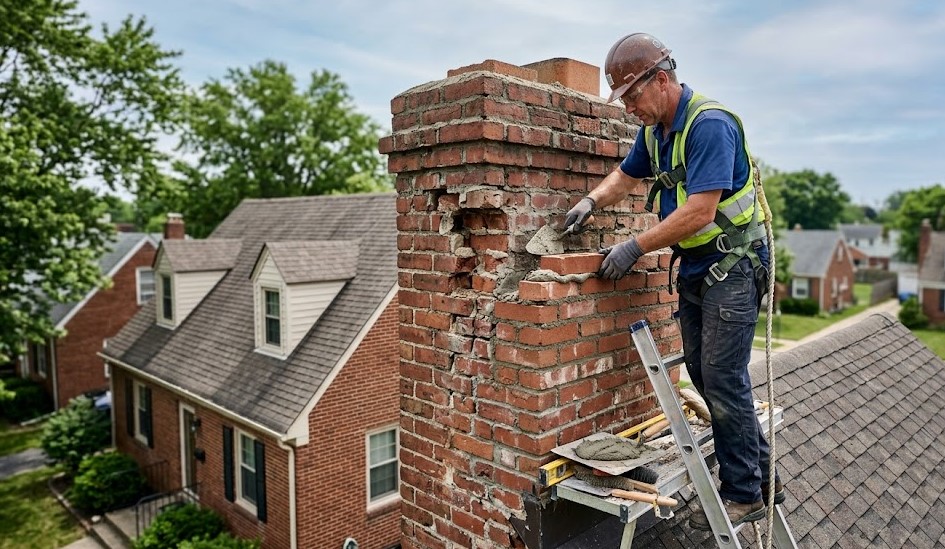
Chimney repair comes in several different forms, and each type depends on the level of damage and the specific part of the chimney that is affected. The most common type is masonry repair, which involves fixing cracked or broken bricks and restoring damaged mortar joints. This process, often called repointing, helps strengthen the chimney structure and prevents water from entering through gaps. It is one of the most important maintenance steps in chimney repair because it directly improves stability and extends the chimney’s lifespan.
Another major type of repair involves fixing or replacing the chimney crown and cap. The crown is the top cement layer that protects the chimney from rain and snow, while the cap prevents debris, animals, and excess moisture from entering the flue. When these components crack or deteriorate, water can easily seep into the chimney and cause internal damage. Repairing or replacing them ensures proper protection and ventilation.
Flashing repair is also very common, especially in older homes. Flashing is the metal barrier that seals the gap between the chimney and the roof. If it becomes loose or damaged, it can lead to serious roof leaks and interior water stains. In more severe cases, chimney liner replacement may be required, which involves installing a new protective lining inside the chimney to ensure safe smoke and gas passage. Each of these repair types plays a critical role in maintaining both safety and efficiency.
Step-by-Step Chimney Repair Process Explained
The chimney repair process usually begins with a detailed inspection to identify the exact source and extent of the damage. Professionals examine both the exterior and interior structure, checking for cracks, moisture intrusion, loose bricks, damaged mortar, and flue blockages. This step is crucial because accurate diagnosis ensures that the chimney repair work targets the real problem instead of just treating surface-level symptoms.
Once the inspection is complete, the repair plan is created based on severity. For minor damage, technicians may perform simple repointing, sealing cracks, or replacing small sections of brickwork. In more advanced cases, they may need to rebuild parts of the chimney stack or replace damaged components like the crown or liner. Preparation also includes setting up scaffolding and protective equipment to ensure safe access to higher sections of the chimney.
After preparation, the actual repair work begins. Damaged mortar is carefully removed and replaced with fresh, durable material. Cracked bricks are swapped out, and sealing compounds are applied to prevent future water penetration. If the flashing or crown is damaged, it is repaired or fully replaced to restore waterproof protection. Finally, the chimney is cleaned, tested for airflow, and inspected again to confirm that all issues have been properly resolved and the structure is safe for use.
Cost Factors and What Affects Pricing
The cost of chimney repair can vary widely depending on the type of damage, materials required, and the overall condition of the structure. Minor repairs such as sealing small cracks or replacing a chimney cap are usually more affordable, while major structural work like rebuilding sections of the chimney can become significantly more expensive. In most cases, the bigger the damage, the higher the cost, especially if the problem has been ignored for a long time and spread to multiple areas.
Another important factor affecting price is the height and accessibility of the chimney. Taller chimneys or those located on steep roofs require additional safety equipment and labor, which increases the overall cost. The type of material used also matters—brick, stone, or prefabricated chimneys all have different repair requirements and pricing structures. In addition, regional labor rates can influence how much homeowners end up paying for the same type of repair work.
The severity of water damage is another major cost driver. If moisture has reached the internal flue liner or caused structural weakening, repairs may involve partial reconstruction rather than simple fixes. In such cases, the cost rises significantly because more labor-intensive work and specialized materials are required. Overall, timely inspection and early repair can greatly reduce expenses and prevent small issues from turning into expensive restoration projects.
DIY vs Professional Chimney Repair
When it comes to chimney repair, homeowners often wonder whether they can handle the work themselves or if they should hire a professional. Small maintenance tasks like cleaning debris from the chimney cap or visually inspecting for cracks can sometimes be done by homeowners with basic safety precautions. However, anything involving structural damage, roof access, or internal flue issues should be approached with extreme caution.
DIY chimney repair may seem cost-effective at first, but it carries significant risks. Working at heights without proper safety equipment can lead to accidents, and incorrect repairs can worsen the damage over time. For example, using the wrong type of mortar or sealant can trap moisture inside the chimney, causing further deterioration instead of fixing the problem. This is why many experts strongly discourage DIY repairs for anything beyond very minor surface issues.
Professional chimney repair services, on the other hand, bring experience, proper tools, and technical knowledge. Trained technicians can accurately diagnose hidden problems that are not visible from the outside, such as internal flue damage or early-stage water intrusion. They also ensure that repairs meet safety standards, reducing the risk of fire hazards or carbon monoxide leakage. In the long run, hiring professionals often proves more reliable and cost-efficient because it prevents repeated repairs and long-term structural damage.
Preventive Maintenance Tips for Long-Term Safety
Preventive maintenance plays a major role in reducing the need for frequent chimney repair and ensuring long-term safety. One of the most important steps homeowners can take is scheduling regular chimney inspections, ideally once a year. These inspections help identify early signs of damage such as small cracks, moisture buildup, or blockages before they turn into serious structural problems. Early detection always saves both time and repair costs.
Keeping the chimney clean is another essential maintenance practice. Over time, soot and creosote accumulate inside the flue, restricting airflow and increasing the risk of chimney fires. Regular cleaning ensures that smoke and gases are properly ventilated, improving both safety and efficiency. Homeowners should also ensure that the chimney cap is in good condition, as it prevents rainwater, debris, and animals from entering the structure.
Protecting the chimney from water damage is equally important. Applying waterproof sealants to exterior masonry and checking flashing around the roof connection can significantly reduce moisture-related issues. Even small leaks should be addressed immediately, as water is one of the most destructive forces for chimney structures. Consistent care and timely maintenance help extend the life of the chimney and minimize expensive repairs in the future.
Conclusion
In conclusion, proper chimney repair is essential for maintaining both the safety and efficiency of your home. A chimney is constantly exposed to heat, moisture, and weather changes, which can gradually weaken its structure if not maintained. From minor cracks in the masonry to serious issues like flue damage or water leakage, every problem should be addressed early to avoid costly repairs and potential safety hazards. Regular inspection, timely maintenance, and professional intervention when needed can significantly extend the lifespan of your chimney and ensure it functions safely throughout the year.
Understanding the different types of damage, repair methods, and maintenance practices helps homeowners make informed decisions. Whether it’s sealing small cracks or rebuilding damaged sections, each repair step plays an important role in protecting the home from fire risks, carbon monoxide leaks, and structural deterioration. Ultimately, investing in chimney care is not just about home improvement—it is about ensuring long-term safety and peace of mind for everyone living in the house.
FAQs
1. How often should chimney repair or inspection be done?
It is recommended to inspect your chimney at least once a year to detect early signs of damage and prevent costly repairs.
2. What is the most common chimney problem?
Water damage is the most common issue, often causing cracks, leaks, and brick deterioration over time.
3. Can chimney damage be dangerous?
Yes, damaged chimneys can lead to fire hazards, poor ventilation, and carbon monoxide leaks inside the home.
4. Is chimney repair expensive?
Costs vary depending on damage severity, but early repairs are usually affordable compared to full chimney rebuilding.
For More Visit guideitfast.com