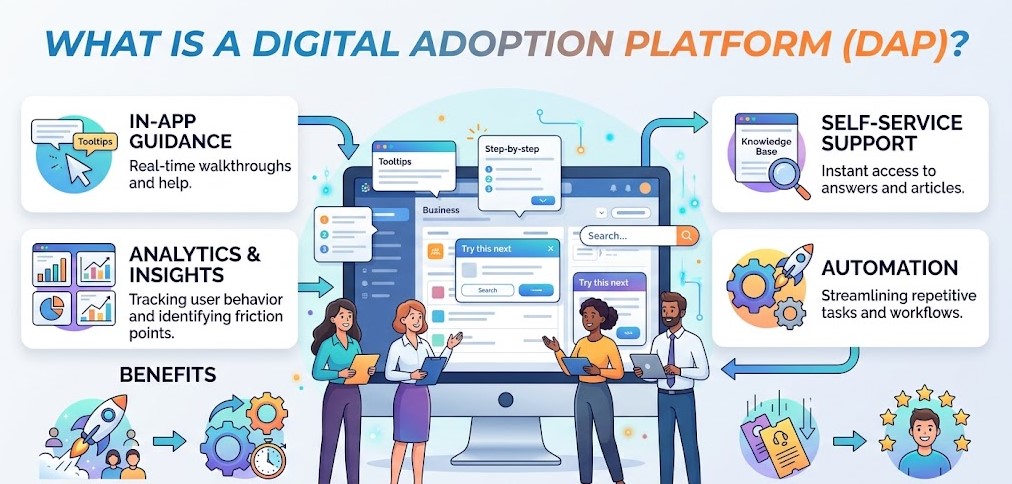
A Digital Adoption Platform (DAP) is a software layer designed to help users understand and use digital applications more effectively while they are actively working inside them. Instead of learning through long training sessions or external guides, users receive real-time, step-by-step guidance directly within the software interface. This makes complex tools easier to use and reduces confusion, especially in large organizations where employees work with multiple systems every day. The main purpose of a DAP is to improve what is a digital adoption platform in practice by ensuring users can complete tasks correctly without constant external support.
At its core, a Digital Adoption Platform acts like an intelligent guide that sits on top of existing applications such as CRMs, HR systems, or enterprise software. It provides interactive walkthroughs, tooltips, and prompts that appear exactly when users need help. This approach not only speeds up learning but also improves productivity because users spend less time figuring out how the system works and more time completing actual tasks. Over time, organizations benefit from smoother onboarding processes, fewer errors, and better overall software adoption across teams.
How a Digital Adoption Platform Works in Real Applications
A Digital Adoption Platform works by integrating directly with existing software systems and layering interactive guidance on top of the user interface. When a user opens an application like a CRM or HR management tool, the platform detects where the user is and what task they are trying to complete. Based on this context, it provides real-time instructions such as pop-ups, step-by-step walkthroughs, and highlighted buttons. This makes the experience more intuitive because users are not forced to leave the application to search for help or watch training videos.
In real-world use, the system continuously tracks user behavior and adapts guidance accordingly. For example, if a new employee is learning how to create a customer record in a sales system, the Digital Adoption Platform will guide them through each field, explain what information is required, and prevent errors before they happen. This process reduces dependency on IT support teams and improves efficiency across departments. As a result, organizations can ensure smoother onboarding, faster task completion, and better adoption of complex software tools without disrupting daily workflows.
Key Features of a Digital Adoption Platform
A Digital Adoption Platform is built with several powerful features that work together to simplify software usage and improve user experience. One of the most important features is in-app guidance, which provides step-by-step instructions directly inside the software interface. This allows users to learn while doing, instead of relying on external training materials. Another key feature is interactive walkthroughs, where users are guided through complete workflows such as filling forms, creating reports, or managing customer data in real time. These features make complex systems much easier to understand, especially for new users.
Another essential feature is contextual help and smart tooltips, which appear only when needed based on user actions. This prevents confusion and ensures users receive the right support at the right time. Many Digital Adoption Platforms also include user analytics and behavior tracking, which helps organizations understand how employees interact with software and where they face difficulties. Some advanced platforms even offer automation features, allowing repetitive tasks to be completed faster with minimal manual effort. Together, these features improve productivity, reduce training costs, and ensure smoother adoption of digital tools across the organization.
Benefits of Using a Digital Adoption Platform in Businesses
A Digital Adoption Platform delivers significant advantages to businesses by improving how employees interact with complex software systems. One of the most important benefits is faster employee onboarding, as new users can learn directly within the application instead of attending long training sessions. This reduces the learning curve and helps employees become productive much sooner. It also minimizes dependency on trainers or support teams, making the entire onboarding process more efficient and cost-effective.
Another major benefit is improved productivity and reduced errors. When users receive real-time guidance, they are less likely to make mistakes while completing tasks such as data entry, reporting, or customer management. This leads to higher accuracy and better business outcomes. Additionally, Digital Adoption Platforms help organizations maximize their investment in software tools by ensuring they are actually used to their full potential. Over time, this results in better software adoption rates, smoother workflows, and a stronger return on digital transformation initiatives.
Real-World Use Cases of Digital Adoption Platforms
Digital Adoption Platforms are widely used across industries where employees rely heavily on complex software systems. In large enterprises, especially in sales and customer service departments, these platforms help staff learn how to use CRM systems more efficiently. Instead of attending repeated training sessions, employees receive in-app guidance that shows them exactly how to create leads, update customer records, or generate reports. This reduces onboarding time and ensures consistent performance across teams, even when staff turnover is high.
In the healthcare and finance sectors, Digital Adoption Platforms play an even more critical role due to the need for accuracy and compliance. For example, hospital staff can use guided workflows to enter patient data correctly into digital health systems, reducing the risk of errors. Similarly, in banking environments, employees are guided through secure transaction processes and regulatory workflows. These use cases demonstrate how the technology supports both operational efficiency and compliance, making it an essential tool for organizations undergoing digital transformation.
Challenges and Limitations of Digital Adoption Platforms
While Digital Adoption Platforms offer many advantages, they also come with certain challenges that organizations need to consider before implementation. One common issue is integration complexity, as DAPs must work smoothly with existing software systems like CRM, ERP, or custom enterprise applications. In some cases, older legacy systems may not fully support modern DAP tools, which can create technical limitations and require additional customization. This can increase setup time and initial implementation costs.
Another limitation is user resistance and over-reliance on guidance tools. Some employees may feel overwhelmed by constant in-app prompts, especially if the system is not configured properly. Instead of encouraging learning, excessive guidance can sometimes slow down experienced users. Additionally, organizations may become too dependent on the platform, reducing natural learning of the software itself. These challenges highlight the importance of balancing automation, user experience, and proper configuration to ensure the Digital Adoption Platform delivers maximum value without disrupting workflows.
Future of Digital Adoption Platforms in Digital Transformation
The future of Digital Adoption Platforms is closely tied to the rapid growth of digital transformation across industries. As businesses continue to adopt more complex cloud-based tools, the need for real-time in-app guidance will become even more important. Future DAPs are expected to become more intelligent, using AI-driven personalization to understand user behavior and deliver highly customized support. Instead of generic walkthroughs, users will receive guidance tailored to their role, skill level, and daily tasks, making software learning even more efficient.
Another major development will be the expansion of automation and predictive assistance. Future Digital Adoption Platforms may not only guide users but also anticipate their next steps and automatically complete repetitive tasks. Integration with advanced analytics and machine learning will help organizations identify productivity gaps before they become problems. As companies continue to prioritize efficiency and user experience, DAPs will evolve from simple training tools into fully intelligent digital assistants that play a central role in workplace productivity and enterprise software success.
Conclusion
A Digital Adoption Platform has become an essential tool for modern organizations that rely on multiple digital systems to run daily operations. As explained throughout this article, the concept of what is a digital adoption platform goes beyond simple training tools—it is a complete in-app guidance system that helps users understand, navigate, and fully utilize software applications in real time. By reducing learning complexity and providing step-by-step assistance, DAPs ensure that employees can work more efficiently and confidently, even when dealing with advanced enterprise systems.
In today’s digital-first environment, businesses cannot afford low software adoption rates or inefficient training methods. Digital Adoption Platforms solve this challenge by improving productivity, reducing errors, and maximizing the return on technology investments. From onboarding new employees to supporting complex workflows in industries like healthcare, finance, and sales, these platforms are becoming a key part of digital transformation strategies. As technology continues to evolve, DAPs will likely become even more intelligent, personalized, and automated, further enhancing workplace efficiency.
FAQs
1. What is a Digital Adoption Platform in simple words?
It is a software tool that helps users learn and use applications through step-by-step guidance inside the system.
2. Why are Digital Adoption Platforms important?
They improve software usage, reduce training time, and help employees work more efficiently with fewer errors.
3. Which industries use Digital Adoption Platforms?
Industries like healthcare, banking, IT, retail, and enterprise businesses commonly use them.
4. Do Digital Adoption Platforms replace training?
Not completely, but they reduce the need for traditional training by providing real-time, in-app learning support.
For More Visit guideitfast.com