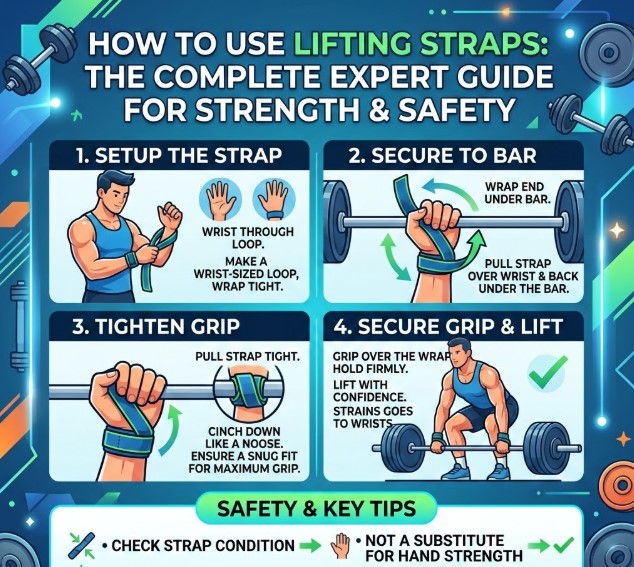
If your grip gives out before your back, hamstrings, or lats are fully fatigued, it’s time to learn how to use lifting straps correctly. Lifting straps are powerful strength-training tools that help eliminate grip as the limiting factor during heavy pulling exercises like deadlifts, lat pulldowns, rows, and pull-ups. When used strategically, they enhance performance, increase training volume, and support progressive overload without compromising safety.
Athletes in powerlifting, bodybuilding, and strength sports often incorporate straps to push past grip fatigue. Even organizations such as National Strength and Conditioning Association recognize grip support tools as effective accessories when applied responsibly within a structured program.
This in-depth guide explains how to use lifting straps correctly across different exercises, including deadlifts, lat pulldowns, pull-ups, and dumbbells, plus guidance on popular brands like Gymreapers. Written with evidence-based principles and practical gym experience, this article ensures you maximize results safely and intelligently.
What Are Lifting Straps and Why Should You Use Them?
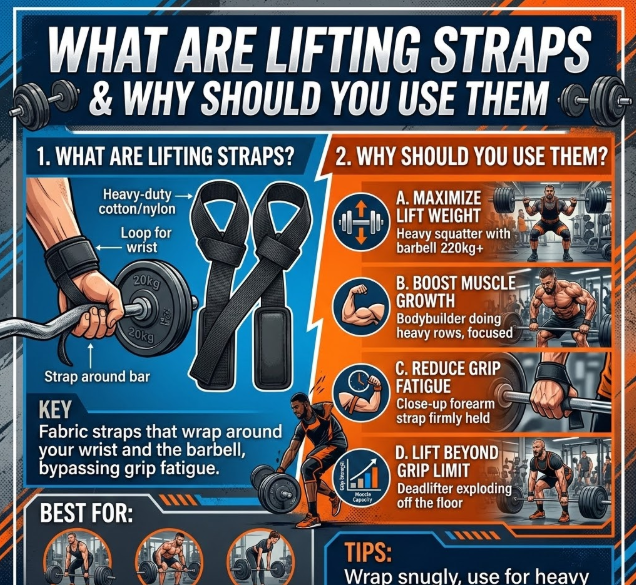
Lifting straps are durable fabric or cotton loops designed to wrap around your wrists and secure tightly around a barbell, dumbbell, or cable attachment. Their primary function is to reinforce grip strength during heavy pulling movements.
Understanding their purpose is essential before integrating them into your workouts.
• They Reduce Grip Fatigue During Heavy Pulls
Grip muscles are smaller than major muscle groups like the lats or glutes. During heavy lifts, grip often fails first.
Straps allow you to continue targeting larger muscles without premature hand fatigue limiting performance.
• They Improve Training Volume and Progressive Overload
By supporting grip, straps help lifters complete additional reps or heavier sets.
This supports progressive overload, which is critical for muscle growth and strength gains.
• They Help Focus on Target Muscles
Instead of squeezing the bar intensely, you can focus on contracting your back or hamstrings.
This mind-muscle connection improves training efficiency.
• They Support Injury Prevention
Excessive grip strain can irritate tendons in the forearm.
Straps reduce repetitive stress when training at high intensity.
• They Are Common in Strength Sports
Powerlifters, strongmen, and bodybuilders regularly use straps strategically.
However, they are typically reserved for accessory or high-rep work.
• They Should Not Replace Grip Training Entirely
Overreliance may weaken natural grip strength.
Use straps selectively rather than on every set.
Also Read:- How to Store Peaches: The Complete Freshness & Ripening Guide
How to Use Lifting Straps Correctly
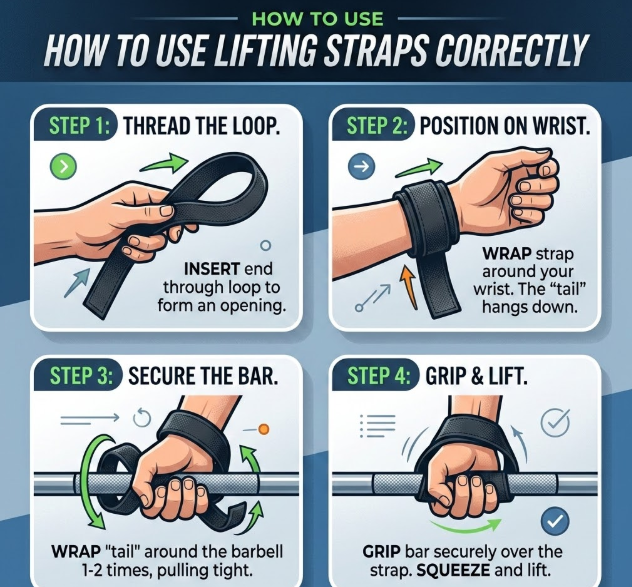
Before focusing on specific exercises, mastering how to use lifting straps correctly ensures safety and efficiency.
Improper wrapping can cause slipping or uneven bar control.
• Insert Wrist Through the Loop
Slide your hand through the strap loop so it tightens around your wrist.
The loose end should hang toward your palm.
• Position Strap Under the Bar
Place the strap under the barbell first.
This creates a secure anchor point.
• Wrap the Strap Around the Bar
Twist the bar toward you while pulling the strap tightly.
Ensure there is no slack.
• Close Your Hand Over the Wrapped Strap
Grip the bar firmly after wrapping.
The strap should feel snug but not restrictive.
• Maintain Neutral Wrist Position
Avoid bending wrists excessively backward.
Keep alignment neutral for joint safety.
• Test Grip Before Lifting
Pull gently upward to ensure secure attachment.
Never begin heavy lifts without checking tension.
Also Read:- How to Start Composting – The Ultimate Beginner’s Guide
How to Use Lifting Straps Deadlift
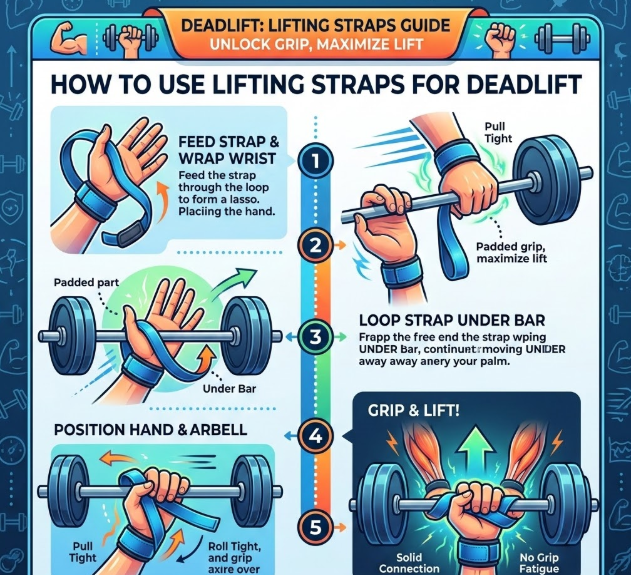
Learning how to use lifting straps deadlift sessions can dramatically improve performance during heavy pulling movements.
Deadlifts demand intense grip endurance, especially during high-rep sets.
• Use Straps for Working Sets Only
Warm-up sets should be performed without straps.
This maintains grip development.
• Wrap Bar Before Setting Hips
Secure straps first, then position hips and spine.
This prevents imbalance during setup.
• Keep Bar Close to Shins
Straps improve grip but bar path remains critical.
Maintain tight form throughout the lift.
• Avoid Jerking the Bar
Controlled pull reduces strap slippage.
Explosive jerks can loosen wrapping.
• Release Carefully After Lockout
Do not drop bar abruptly unless bumper plates are used.
Unwrap straps safely between reps if needed.
• Use for Volume Work, Not Max Attempts
Many lifters avoid straps for competition practice.
Use them for hypertrophy or accessory sets.
Also Read:- How to Type Degree Symbol (°) on Any Device – Complete Guide
How to Use Lifting Straps on Lat Pulldown
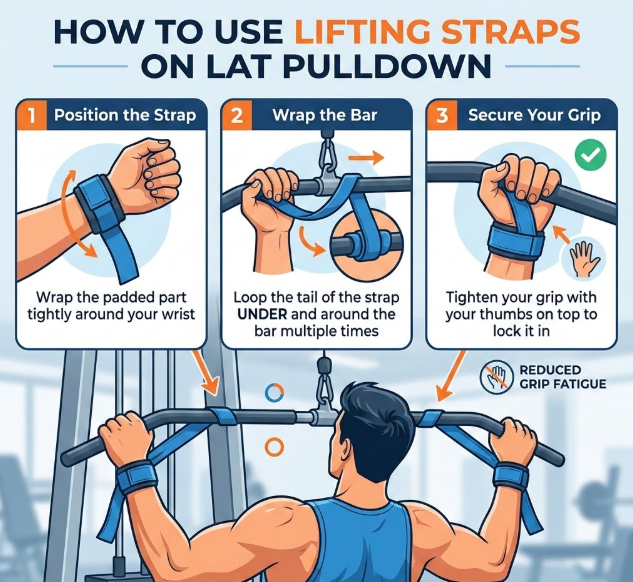
Understanding how to use lifting straps on lat pulldown helps isolate the lats more effectively.
Grip fatigue often limits back development during cable exercises.
• Wrap Around the Pulldown Bar
Secure straps before sitting down.
Ensure both wrists are evenly wrapped.
• Adjust Seat Height First
Proper thigh pad position stabilizes lower body.
Prevents excessive swinging.
• Pull Elbows Down, Not Hands
Focus on driving elbows toward ribs.
Straps reduce grip distraction.
• Control Eccentric Phase
Slow return improves muscle tension.
Avoid letting weight stack slam.
• Keep Chest Elevated
Maintain upright torso posture.
Improves lat activation.
• Unwrap Safely After Final Rep
Release tension slowly.
Avoid snapping straps loose suddenly.
Also Read:- How to Make Obsidian in Minecraft: The Complete Expert Guide
How to Use Lifting Straps for Pull Ups
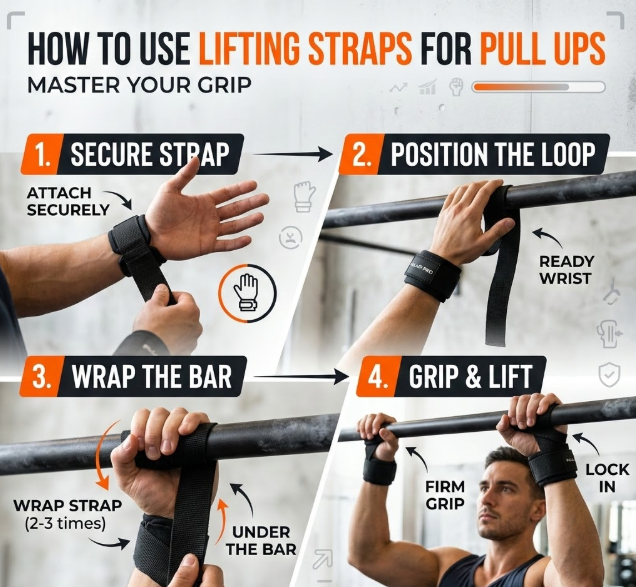
Pull-ups challenge grip endurance significantly. Learning how to use lifting straps for pull ups allows greater repetition volume.
• Secure Straps Around Pull-Up Bar
Wrap tightly before stepping onto platform.
Ensure equal tightness.
• Engage Core Before Pulling
Stabilize body to prevent swinging.
Straps do not replace proper form.
• Drive Elbows Downward
Think of pulling elbows toward hips.
Maximizes lat activation.
• Avoid Excessive Momentum
Kipping reduces muscle engagement.
Controlled reps improve strength.
• Descend Slowly
Controlled negative increases hypertrophy.
Straps assist grip control.
• Remove Carefully After Set
Step down before unwrapping.
Maintain balance throughout.
Also Read:- How to Dice an Onion: The Complete Step-by-Step Kitchen Guide
How to Use Lifting Straps for Dumbbells
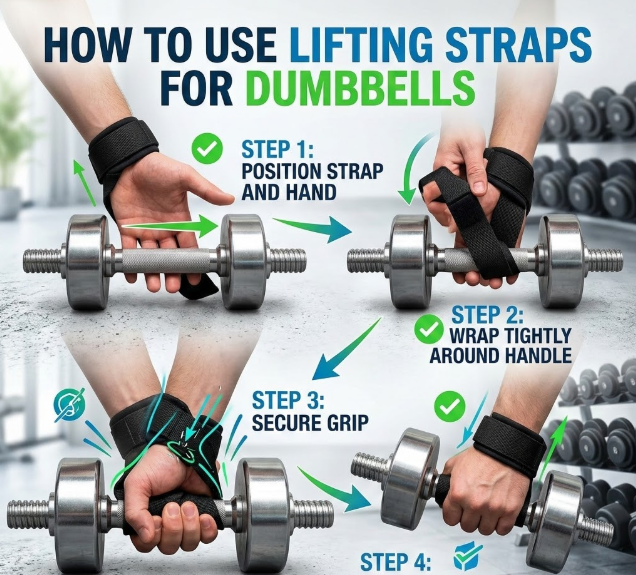
When learning how to use lifting straps for dumbbells, technique differs slightly from barbells.
• Wrap Around Dumbbell Handle
Thread strap under handle first.
Wrap tightly around grip.
• Secure Before Lifting
Ensure no slack remains.
Loose straps compromise safety.
• Use for Heavy Rows or Shrugs
Straps are ideal for pulling exercises.
Less common for pressing movements.
• Maintain Neutral Wrist Alignment
Avoid twisting dumbbells mid-lift.
Keep wrist straight.
• Focus on Controlled Movements
Prevent swinging weights excessively.
Straps support grip but not form.
• Unwrap Between Sets
Allow blood flow to wrists.
Reduces discomfort.
Also Read:- How to Ripen Avocados: Complete Guide for Perfectly Ripe Fruit
How to Use Lifting Straps Gymreapers
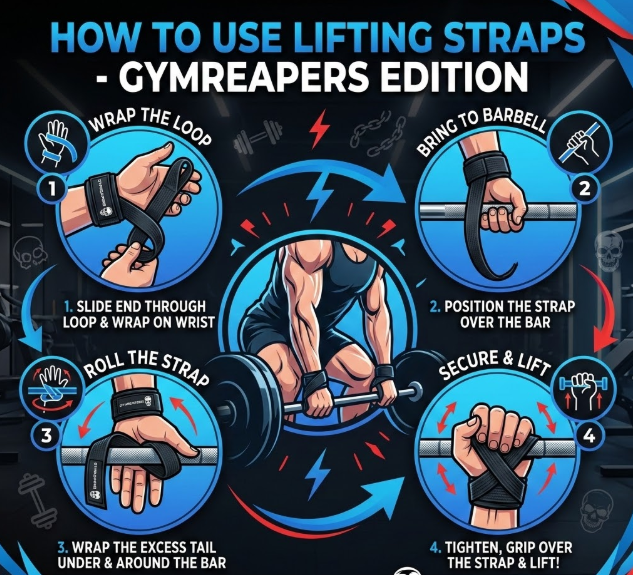
Gymreapers lifting straps are popular for durability and comfort.
• Follow Standard Loop Method
Their cotton straps use traditional lasso design.
Thread hand through loop as usual.
• Adjust Padding Position
Ensure padding rests comfortably on wrist.
Prevents friction burns.
• Tighten Firmly Before Heavy Sets
Their material grips well when twisted tightly.
Test tension before lifting.
• Clean Regularly
Sweat buildup reduces lifespan.
Wash according to brand instructions.
• Inspect for Fraying
Check stitching before use.
Replace if damaged.
• Store Properly After Workouts
Keep dry and ventilated.
Extends durability.
Also Read:- How to Fix WiFi: The Complete Step-by-Step Troubleshooting Guide
Best Practices for Safe Strap Use
• Do Not Use on Every Exercise
Reserve for heavy pulling movements.
• Continue Grip Training Separately
Incorporate farmer’s carries and holds.
• Monitor Wrist Comfort
Discontinue use if pain occurs.
• Avoid Competitive Overreliance
Train raw grip periodically.
• Combine with Chalk if Allowed
Chalk enhances friction further.
• Consult Certified Trainer
Seek guidance for advanced programming.
Also Read:- How to Take Care of Mums: The Complete Expert Guide to Healthy, Long-Lasting Blooms
Conclusion
Mastering how to use lifting straps can significantly improve your strength training performance when applied correctly. Whether performing deadlifts, lat pulldowns, pull-ups, or dumbbell rows, straps help eliminate grip as a limiting factor while allowing greater focus on target muscles.
However, they should be used strategically—not as a permanent substitute for natural grip strength. By integrating straps responsibly, maintaining proper technique, and following safe training principles, you can maximize muscle growth and reduce injury risk.
For additional strength-training guidance, consult certified professionals or organizations like the National Strength and Conditioning Association for evidence-based programming insights.
FAQs
Are lifting straps cheating?
No, they are tools designed to support grip during heavy lifts.
Should beginners use lifting straps?
Beginners should first build foundational grip strength before relying on straps.
Can straps weaken grip strength?
Overuse may reduce grip development if not balanced with grip training.
Are straps allowed in powerlifting competitions?
Most powerlifting federations do not allow straps in competition lifts.
How tight should lifting straps be?
Snug enough to eliminate slack but not restrict circulation.
For More Visit guideitfast.com