
Learning how to make a paper dart is one of those timeless skills that blends creativity, simple engineering, and hands-on fun. Whether you’re a student experimenting during a break, a teacher looking for a quick STEM activity, or a hobbyist who enjoys paper crafts, paper darts offer an engaging way to explore aerodynamics using nothing more than paper and careful folding.
Paper darts are lightweight, fast-flying paper projectiles designed to glide smoothly through the air. Unlike random paper throws, a well-made paper dart follows principles of balance, symmetry, and airflow. This guide explains how to make a paper dart step by step, including easy versions, sticky-note darts, stapled darts, and dart-style paper planes—all while focusing on precision, safety, and creativity.
Why Learning How to Make a Paper Dart Is Popular
Paper darts remain popular because they combine simplicity with experimentation.
• Requires only basic materials
• Encourages problem-solving and fine motor skills
• Demonstrates real aerodynamics concepts
• Easy to customize and improve
• Fun for kids, teens, and adults
• Suitable for classrooms and home activities
Understanding how a paper dart works makes the activity more meaningful and educational.
How to Make a Paper Dart Step by Step
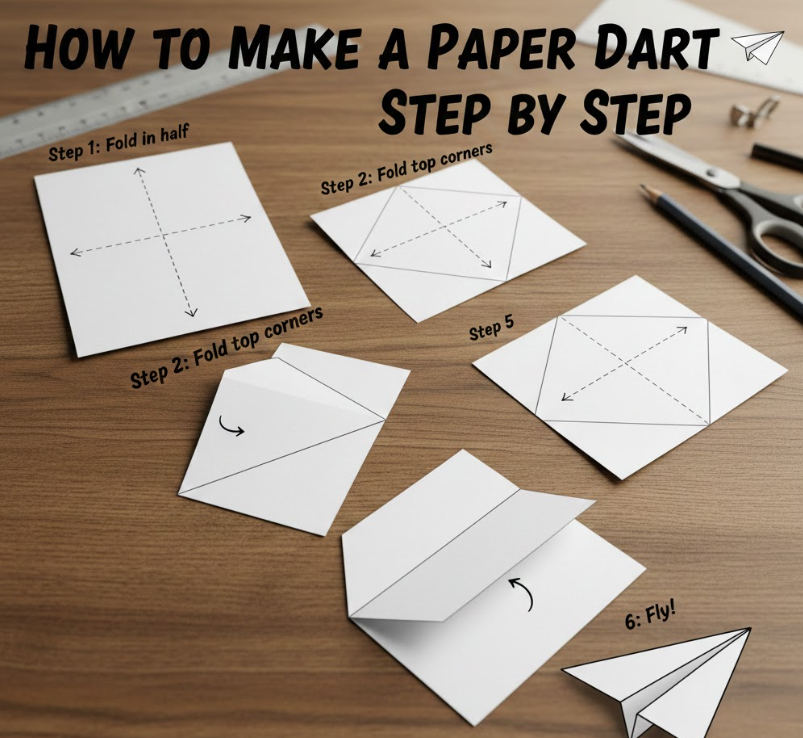
Learning how to make a paper dart step by step is the foundation for all other variations. This method focuses on balance, sharp folds, and controlled airflow.
What a Step-by-Step Paper Dart Means
A step-by-step paper dart is designed using clean folds and symmetry so it flies straight and fast. The goal is not just to throw paper, but to create a structured shape that cuts through air efficiently.
Detailed Step-by-Step Paper Dart Construction
• Choose the Right Paper Type
Standard A4 or letter-size paper works best because it offers enough length for a pointed nose and stable wings. Paper that is too thin flutters, while paper that is too thick resists clean folding.
• Create a Sharp Center Fold
Folding the paper lengthwise creates a spine that stabilizes the dart in flight. This fold acts like a backbone, helping the dart maintain direction and balance.
• Form the Pointed Nose Carefully
Folding the top corners inward toward the center line creates a narrow nose. A sharp nose reduces air resistance and improves speed.
• Reinforce the Front Structure
Folding the nose down once more adds weight to the front, shifting the center of gravity forward for better flight stability.
• Fold the Wings Symmetrically
Even wings are critical. Uneven folds cause spinning or diving. Each wing should mirror the other exactly.
• Adjust Wing Angles for Performance
Slight upward bends at the back of the wings can increase lift and distance, while flat wings improve speed.
Also Read:- How to Clean a Pizza Stone (The Right Way)
How to Make a Paper Dart Easy
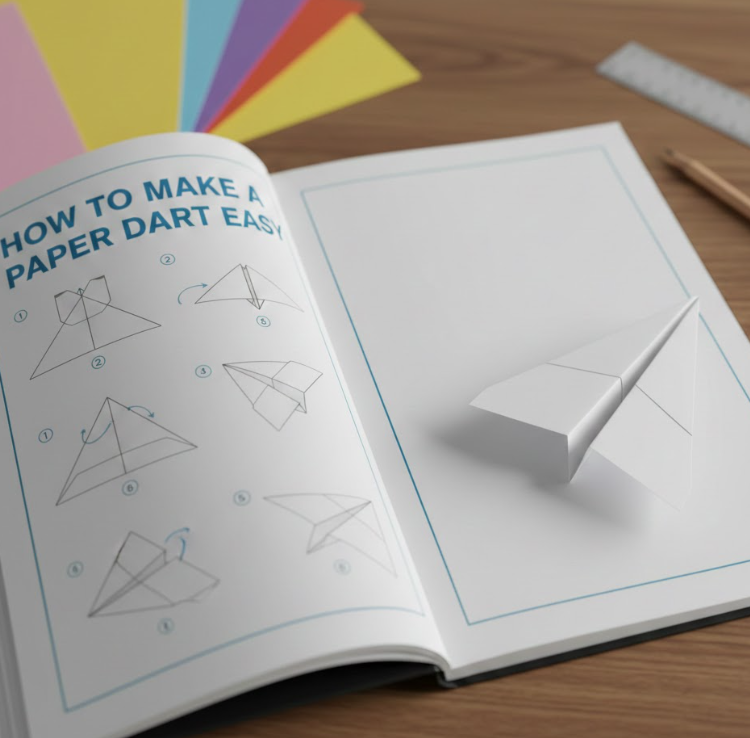
If you want quick results, learning how to make a paper dart easy focuses on fewer folds and minimal adjustments.
What Makes a Paper Dart Easy
An easy paper dart removes complexity without sacrificing performance. It’s ideal for beginners, kids, or quick classroom activities.
Easy Paper Dart Techniques Explained
• Use Pre-Folded Paper When Possible
Notebook paper with an existing fold saves time and improves symmetry for beginners.
• Limit the Number of Folds
Fewer folds reduce confusion and mistakes, allowing faster completion and better consistency.
• Focus on Nose Weight First
A heavier front helps even simple designs fly straight.
• Avoid Over-Adjusting Wings
Too many tweaks can worsen flight. Simple, flat wings often perform best.
• Test and Refold Gradually
Small changes after test flights help beginners learn cause and effect.
• Encourage Experimentation
Easy darts are perfect for learning through trial without frustration.
Also Read:- How to Water Succulents: Essential Techniques for Healthy Plants
How to Make a Paper Dart with a Sticky Note
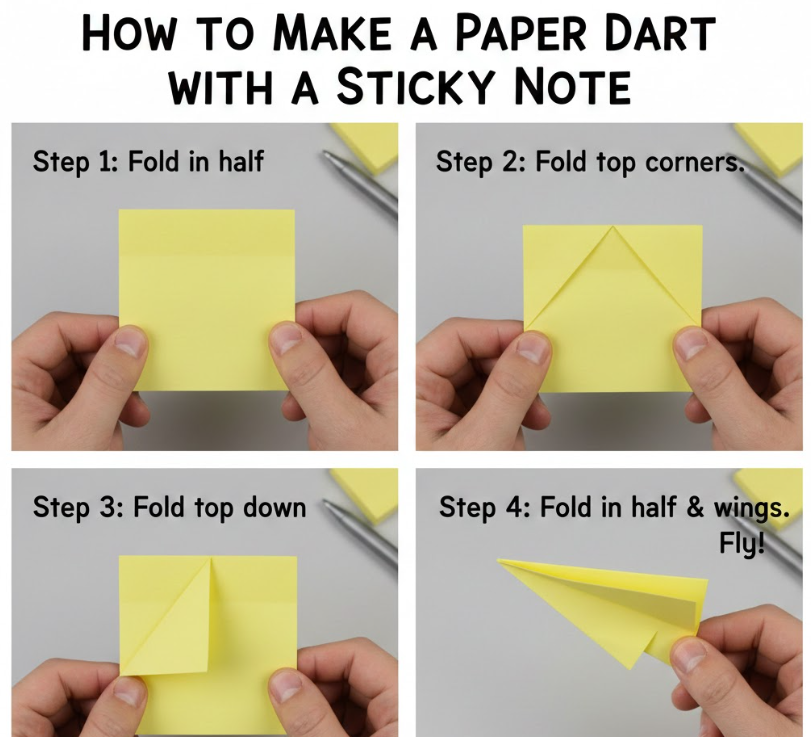
Learning how to make a paper dart with a sticky note is perfect when standard paper isn’t available.
Why Sticky Notes Work for Paper Darts
Sticky notes are smaller, lighter, and already square, which changes flight behavior. Their adhesive edge can also reinforce folds.
Sticky Note Paper Dart Method
• Choose a Larger Sticky Note
3×3 inch notes are usable, but 4×6 inch notes provide better balance and distance.
• Use the Adhesive Edge Strategically
Placing the sticky edge at the nose helps keep folds secure during flight.
• Fold Precisely Due to Size Limits
Small paper magnifies errors, so clean folds are especially important.
• Create a Compact Nose
A tight nose prevents fluttering caused by lightweight paper.
• Keep Wings Narrow
Wide wings on small paper cause drag and instability.
• Expect Shorter Flight Distance
Sticky note darts are best for accuracy games rather than long throws.
How to Make a Paper Dart Plane
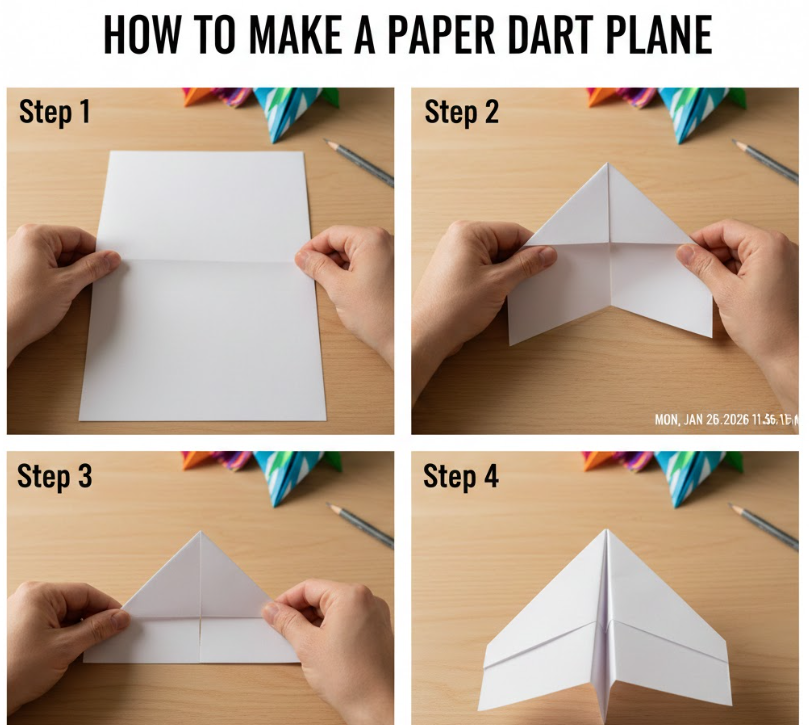
A dart-style paper plane combines speed with glide. Learning how to make a paper dart plane bridges traditional darts and airplanes.
What Defines a Paper Dart Plane
A paper dart plane has a sharp nose like a dart but wings shaped for lift, allowing longer, smoother flights.
Dart Plane Design Principles
• Long Nose for Penetration
A narrow, pointed front helps the plane cut through air efficiently.
• Wide, Balanced Wings
Unlike standard darts, dart planes rely on lift for distance.
• Reinforced Center Fold
This strengthens the plane and improves directional stability.
• Winglets for Control
Small vertical folds at the wing tips reduce wobble.
• Balanced Weight Distribution
Too much nose weight causes diving; too little causes stalling.
• Throwing Technique Matters
Smooth, level throws work better than hard launches.
How to Make a Paper Dart with a Staple
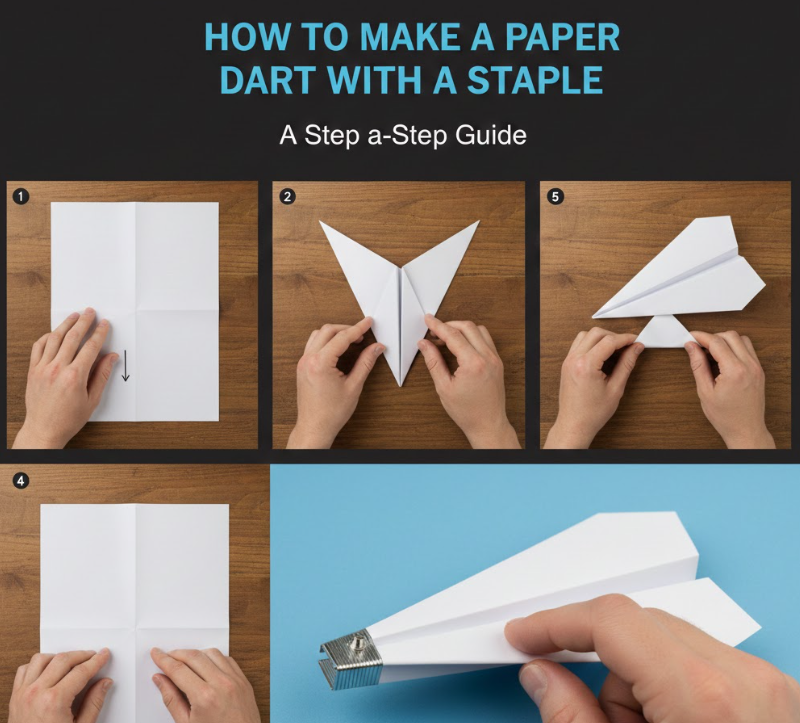
Learning how to make a paper dart with a staple focuses on improving stability through controlled weight.
Why Add a Staple to a Paper Dart
A staple adds mass to the nose, improving balance and speed. However, safety and proper placement are essential.
Stapled Paper Dart Best Practices
• Place the Staple Near the Nose
Front placement shifts the center of gravity forward for smoother flight.
• Use Only One Staple
Extra staples add unnecessary weight and reduce performance.
• Ensure Staple Is Fully Closed
Open ends can snag paper or cause damage.
• Combine with Strong Folds
Staples work best when folds are tight and symmetrical.
• Use in Open, Safe Areas Only
Stapled darts should never be thrown at people or animals.
• Test Distance vs Accuracy
Staples improve speed but may reduce control if overused.
Common Mistakes When Making a Paper Dart
• Uneven folds causing spinning
• Too much nose weight leading to diving
• Loose wings creating drag
• Using damaged or wrinkled paper
• Throwing too hard instead of smoothly
• Ignoring test-and-adjust steps
Recognizing these mistakes improves results quickly.
Educational Value of Paper Darts
Paper darts are more than toys—they teach real concepts.
• Basic aerodynamics
• Center of gravity principles
• Cause-and-effect testing
• Fine motor coordination
• Creative problem-solving
• STEM learning through play
Teachers often use paper darts to introduce physics concepts in a fun way.
Conclusion
Learning how to make a paper dart is a simple yet rewarding activity that combines creativity, science, and hands-on learning. Whether you prefer an easy design, a sticky-note version, or a dart-style paper plane, the key to success lies in precision, balance, and thoughtful adjustments.
Paper darts remind us that even the simplest materials can teach powerful lessons about physics and creativity. With the techniques in this guide, you can build better darts, understand why they fly, and enjoy the process of improvement
FAQs
What paper works best for a paper dart?
Standard printer paper offers the best balance of weight and foldability.
Are paper darts safe?
Yes, when used responsibly and never aimed at people or pets.
Why does my paper dart spin?
Uneven folds or mismatched wings usually cause spinning.
Can kids make paper darts?
Yes, with supervision and non-stapled versions for safety
For More Visit guideitfast.com