
Knowing how to water succulents properly is crucial for maintaining their vibrant appearance, longevity, and overall health. Overwatering is one of the most common mistakes succulent owners make, often leading to root rot, leaf drop, and stunted growth. Succulents are adapted to arid environments, meaning they store water in their leaves and stems and require careful watering strategies.
This guide explores watering succulents indoors, in pots, without drainage, from the bottom, and in terrariums, providing step-by-step techniques for each scenario. By following these methods, you can ensure your succulents thrive regardless of their environment, soil type, or container choice.
How to Water Succulents Indoors
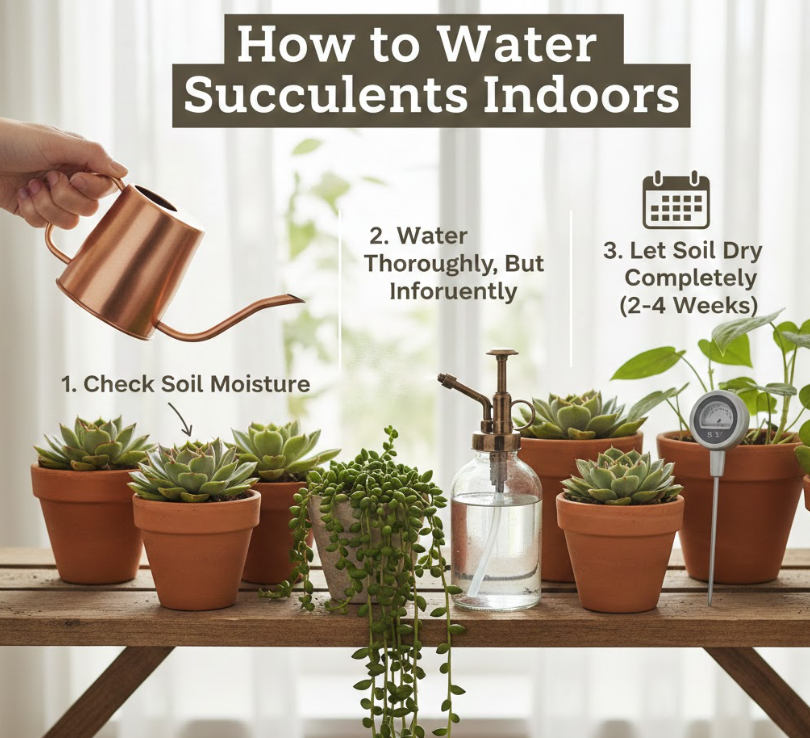
Indoor succulent care requires attention to lighting, humidity, and watering frequency, as indoor conditions differ significantly from outdoor environments. Overwatering or neglect can easily harm these drought-resistant plants.
Indoor Watering Principles
• Understanding Indoor Conditions
Indoor environments are typically less humid and receive less sunlight than outdoor spaces. This affects how quickly the soil dries and how much water the succulent requires.
• Choosing the Right Watering Schedule
Water succulents indoors based on soil dryness rather than a fixed schedule. This approach prevents overwatering and encourages deep root growth.
• Using Room Temperature Water
Cold water can shock succulent roots, slowing growth. Using water at room temperature ensures better absorption and minimizes stress.
• Identifying Signs of Underwatering
Wrinkled leaves, slow growth, and dry tips indicate your plant may need water. Observing these signs helps fine-tune watering frequency.
• Avoiding Water on Leaves
Pouring water directly on leaves can cause fungal infections. Direct soil watering encourages roots to absorb moisture efficiently.
• Monitoring Humidity and Temperature
Indoor humidity levels affect evaporation. Adjust watering frequency if the room is particularly dry or near heating and cooling sources.
How to Water Succulents Without Drainage
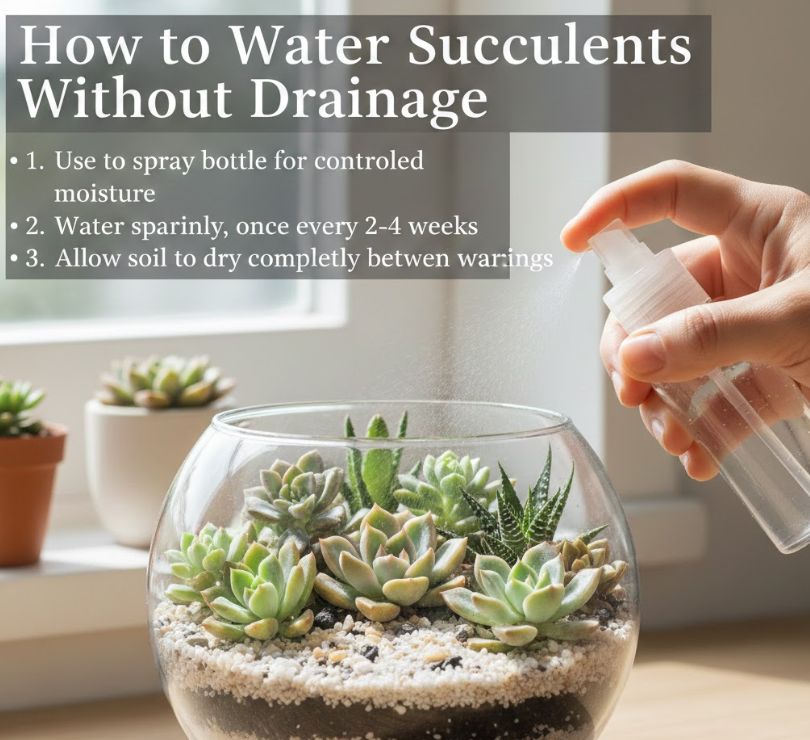
Succulents in containers without drainage holes require careful water management to prevent root rot. These setups are common in decorative containers or terrariums.
Techniques for Non-Draining Containers
• Measuring Water Quantity Carefully
Only small amounts of water should be applied at a time. Excess water cannot escape, making precise measurement critical.
• Using a Moisture Meter
A moisture meter helps gauge soil wetness and prevents accidental overwatering in non-draining containers.
• Watering Less Frequently
Succulents in closed or decorative containers need less frequent watering. Allow the soil to dry thoroughly before the next watering.
• Adding a Layer of Pebbles
Pebbles or stones at the bottom act as a reservoir, reducing root contact with excess water. This creates a mini-drainage effect.
• Checking Root Health Regularly
Gently remove the plant occasionally to inspect roots for signs of rot. Early detection allows corrective measures without losing the plant.
• Avoiding Fertilization Immediately After Watering
Fertilizing moist soil can encourage root burn. Wait until the soil dries completely to feed succulents safely.
How to Water Succulents in Pots
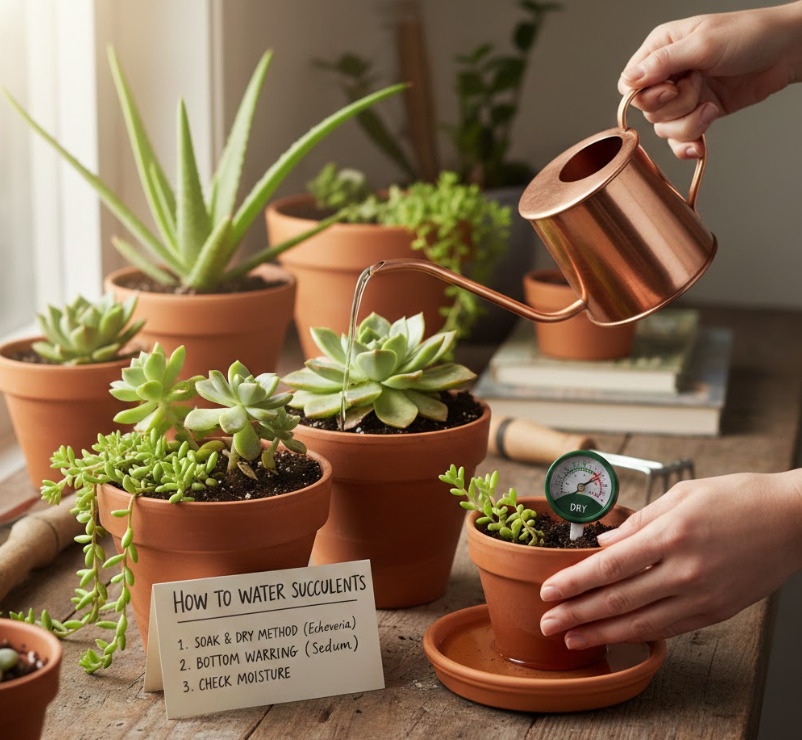
Potted succulents are versatile, but their water needs vary based on pot size, material, and soil type. Proper technique ensures healthy root development.
Potted Succulent Watering Methods
• Selecting the Right Soil Mix
Well-draining soil prevents water accumulation and reduces root rot risk. Mix sand, perlite, and potting soil for optimal drainage.
• Watering Thoroughly But Infrequently
Saturate the soil until water exits the drainage hole, then let it dry completely. Deep watering encourages strong root systems.
• Adjusting for Pot Material
Terracotta pots dry faster than plastic. Monitor soil moisture and adjust watering frequency based on pot type.
• Observing Seasonal Needs
Succulents require less water in winter dormancy. Reduce frequency and monitor plant activity for seasonal adjustments.
• Avoiding Water on Decorative Mulch
Mulch can retain moisture on the surface, promoting fungal growth. Water soil directly to maintain plant health.
• Using a Watering Can With a Narrow Spout
Directing water precisely into the soil minimizes splashing and keeps leaves dry, reducing fungal and bacterial issues.
How to Water Succulents From the Bottom
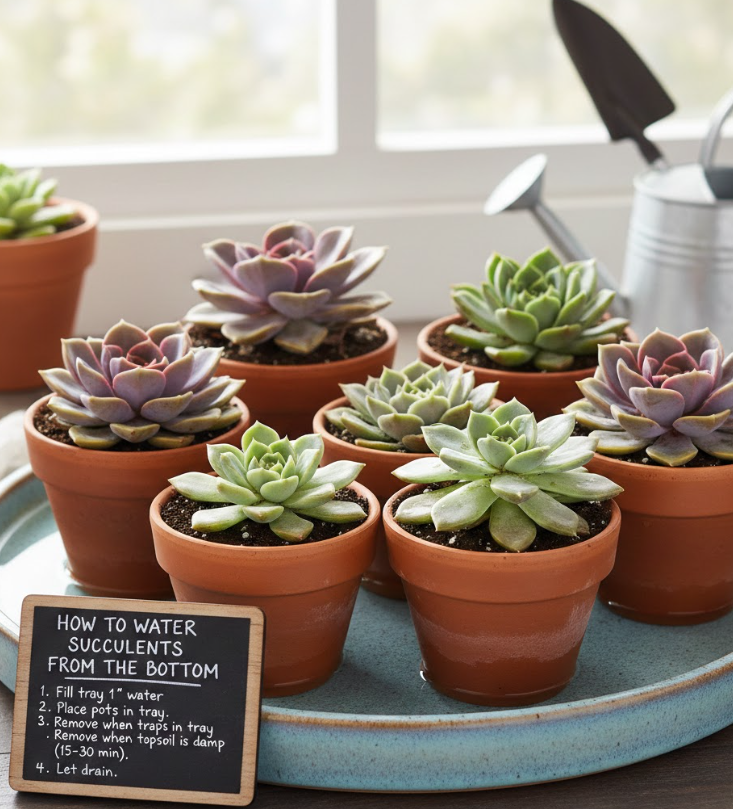
Bottom watering is a technique that encourages deep root growth and prevents surface rot by allowing roots to absorb water gradually.
Bottom Watering Techniques
• Using a Shallow Tray
Place the pot in a tray filled with water. The roots draw water upward through the drainage holes, ensuring consistent moisture.
• Timing the Soak
Allow the pot to sit for 15–30 minutes. Over-soaking can saturate the soil and cause root rot.
• Monitoring Soil Moisture
Check the top layer of soil after removing the pot from the tray. Only water again once the soil has dried appropriately.
• Avoiding Leaf Contact
Ensure no water touches leaves, as this increases fungal risk. Bottom watering targets roots directly.
• Replenishing Water Slowly
Add small amounts gradually rather than filling the tray entirely. Slow absorption prevents oversaturation.
• Combining With Standard Watering
Occasionally supplement bottom watering with top watering for nutrients and surface hydration.
How to Water Succulents in a Terrarium
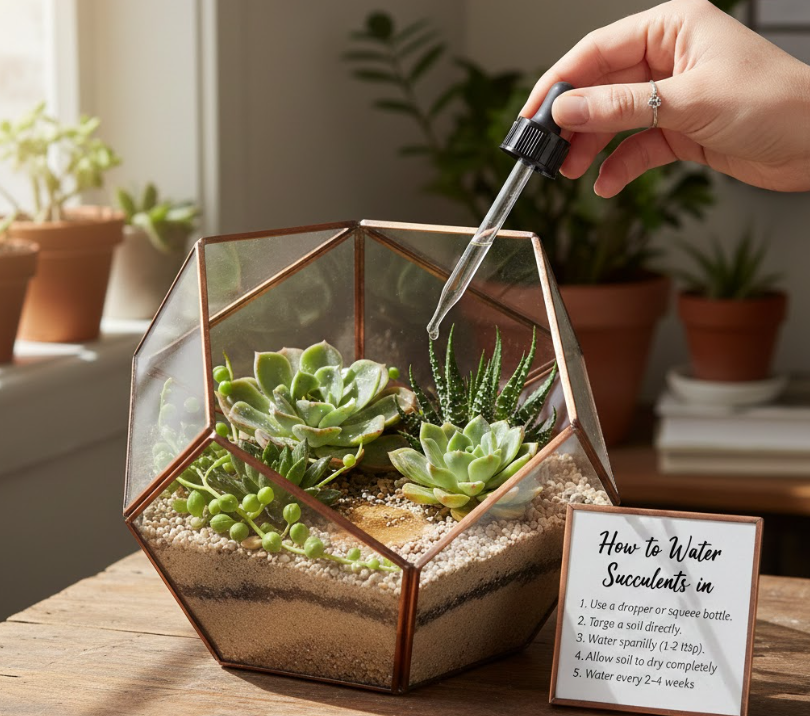
Terrariums are enclosed environments that trap humidity, requiring unique watering strategies. Excess moisture can easily cause fungal problems in these setups.
Terrarium Watering Best Practices
• Choosing Minimal Water Amounts
Succulents need very little water in terrariums. Use a spray bottle or dropper to apply small, controlled quantities.
• Observing Condensation Levels
Excess condensation indicates overwatering. Wipe leaves and reduce water input to prevent mold and root rot.
• Maintaining Air Circulation
Open terrarium lids periodically to reduce humidity. Proper airflow supports healthy root and leaf growth.
• Using Well-Draining Substrate
Add a layer of sand, gravel, or activated charcoal beneath the soil. This layer improves drainage and reduces stagnant moisture.
• Monitoring Plant Health
Watch for signs of rot or mold growth. Promptly remove affected leaves to prevent spread.
• Adjusting Watering Frequency Based on Plant Type
Different succulent species have varying water requirements. Customize your watering schedule to each plant’s needs.
Conclusion
Mastering how to water succulents ensures these hardy plants thrive indoors, in pots, terrariums, and containers without drainage. Proper watering techniques, attention to soil moisture, and understanding each succulent’s needs prevent common problems like overwatering and root rot. By following these detailed strategies, your succulents will remain healthy, vibrant, and resilient for years to come.
FAQs
Q: How often should I water succulents indoors?
Water when the soil is completely dry, usually every 2–3 weeks depending on humidity and temperature.
Q: Can succulents survive without drainage holes?
Yes, but water carefully in small amounts and avoid overwatering to prevent root rot.
Q: Is bottom watering better for succulents?
It encourages deep root growth and minimizes surface rot but should be supplemented with occasional top watering for nutrients
For More Visit guideitfast.com