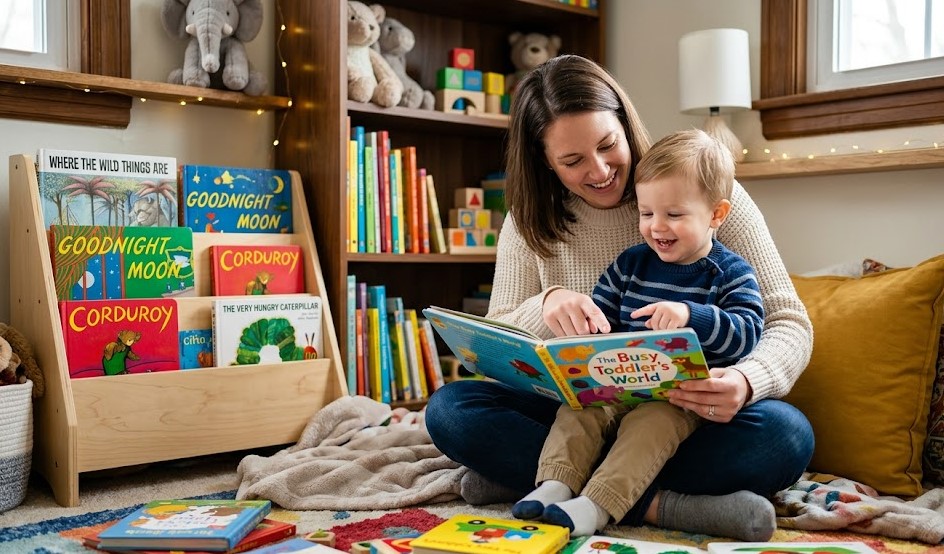
Classic storybooks are often the first step in building a toddler’s love for reading because they combine simple language, repetitive phrases, and colorful illustrations that are easy for young minds to understand. When parents look for the best books to read to toddlers, classic titles usually come at the top of the list because they have been trusted for generations and continue to support early learning in a natural and enjoyable way.
Books like The Very Hungry Caterpillar, Goodnight Moon, and Brown Bear, Brown Bear, What Do You See? help toddlers recognize patterns, colors, and basic storytelling flow. These stories are designed in a way that encourages children to repeat words, predict what comes next, and stay engaged throughout the reading session, which strengthens memory and language development.
Another important benefit of classic storybooks is emotional comfort. Toddlers often enjoy hearing the same story multiple times because it gives them a sense of familiarity and security. This repetition helps them feel confident with language and gradually improves their speaking skills as they start recognizing words and phrases.
These books also create bonding moments between parents and children. Reading together builds trust, attention, and communication, making it not just an educational activity but also a warm daily routine that toddlers look forward to.
Educational Books for Early Learning (ABC & Numbers)
Educational books focused on ABCs and numbers play a major role in early childhood development because they introduce foundational skills in a fun and engaging way. When parents search for the best books to read to toddlers, alphabet and counting books are often included because they help children build the basics of language and mathematics before they even start school.
These books usually use bright illustrations, simple words, and repetitive patterns to help toddlers recognize letters, numbers, and basic words. For example, alphabet books often pair each letter with an object like “A for Apple” or “B for Ball,” making it easier for children to connect sounds with real-world items. This visual association strengthens memory and supports early reading skills.
Counting books are equally important because they introduce toddlers to numbers in a playful way. Instead of focusing on formal math, these books use objects like animals, toys, or food items to teach counting from 1 to 10. This makes learning feel like a game rather than a lesson, which keeps toddlers interested and motivated.
Overall, educational ABC and number books help build confidence in early learning. They prepare toddlers for preschool by developing recognition skills, improving vocabulary, and encouraging curiosity about letters and numbers in their everyday environment.
Interactive Books That Boost Engagement
Interactive books are specially designed to keep toddlers actively involved in the reading experience, making them one of the most effective choices when selecting the best books to read to toddlers. Unlike traditional storybooks, these books encourage children to touch, lift, slide, or respond while reading, which transforms reading into a hands-on learning activity rather than passive listening.
One of the most popular types of interactive books includes lift-the-flap books, where children can uncover hidden pictures or surprises under flaps. This simple action builds curiosity and improves attention span because toddlers become eager to see what comes next. Touch-and-feel books are another great example, allowing children to explore different textures like soft fur, rough surfaces, or smooth objects, which helps develop sensory awareness.
Sound books also play an important role in engagement. These books include buttons that produce animal sounds, vehicle noises, or musical tones, making the storytelling experience more lively and memorable. When toddlers hear sounds connected to images, they begin to understand cause and effect, which is an important cognitive skill at an early age.
Overall, interactive books are highly effective because they combine learning with play. They help toddlers stay focused longer, improve motor skills, and create a deeper connection with reading by turning every page into an exciting discovery.
Books That Teach Emotions and Social Skills
Books that focus on emotions and social skills are essential for helping toddlers understand their feelings and the world around them. When parents search for the best books to read to toddlers, emotional learning books are often recommended because they support mental development just as much as language development. These books teach children how to recognize emotions like happiness, sadness, anger, and excitement in a simple and relatable way.
Many of these stories use everyday situations such as sharing toys, making friends, or dealing with frustration to help toddlers connect with real-life experiences. By seeing characters go through similar emotions, children begin to understand that feelings are normal and manageable. This early emotional awareness helps reduce tantrums and improves communication skills over time.
Another important benefit of these books is that they encourage empathy. When toddlers see characters helping each other or solving problems together, they start learning how to behave in social situations. This builds the foundation for kindness, cooperation, and respect, which are key skills for school and friendships later in life.
Overall, emotion-focused books play a powerful role in shaping a toddler’s personality. They help children express themselves better, understand others, and develop healthier relationships from an early age.
Bedtime Books for Calm and Routine
Bedtime books play a very important role in creating a peaceful routine for toddlers, especially when parents are trying to build healthy sleep habits. When people search for the best books to read to toddlers, bedtime stories are always included because they help children relax, slow down their energy, and prepare mentally for sleep.
These books usually have soft, calming language and gentle storylines that avoid excitement or overstimulation. Stories like nighttime adventures, animal sleep routines, or simple family moments help toddlers transition from an active day to a restful night. The predictable rhythm of bedtime reading also signals to the child that it is time to wind down, which makes sleep routines easier to maintain.
Another key benefit of bedtime books is emotional security. When a parent reads to a toddler before sleep, it creates a strong sense of comfort and bonding. This daily routine helps children feel safe and supported, which can reduce nighttime anxiety or resistance to sleeping alone.
Over time, bedtime reading becomes more than just a habit—it becomes a comforting ritual. Toddlers begin to associate books with relaxation and love, which not only improves sleep quality but also strengthens their long-term relationship with reading.
Tips for Parents to Make Reading Effective
Making reading effective for toddlers is not just about choosing the right books, but also about how parents present and share the story. When exploring the best books to read to toddlers, it is important to understand that engagement, tone, and consistency matter just as much as the content itself. A simple story can become powerful learning when it is read in an interactive and expressive way.
One of the most effective tips is to read with expression and emotion. Changing your voice for different characters, using facial expressions, and adding simple sound effects can turn a basic story into an exciting experience. Toddlers respond strongly to energy and tone, which helps them stay focused and understand the story better.
Another important tip is consistency. Reading every day, even for just 10–15 minutes, builds a strong habit and improves language development over time. Parents should also encourage toddlers to point at pictures, repeat words, and ask simple questions during reading sessions. This interaction helps children become active participants instead of passive listeners.
Lastly, choosing a distraction-free environment is key. A quiet, comfortable space allows toddlers to focus better and enjoy the reading experience fully. When reading becomes a calm and regular activity, it naturally builds stronger learning skills and a lifelong love for books.
Conclusion
Reading to toddlers is one of the simplest yet most powerful habits parents can build during early childhood. The best books to read to toddlers are those that combine fun, learning, and emotional connection, helping children develop language skills, creativity, and social understanding at the same time. From classic storybooks to interactive and bedtime reads, each type of book plays a unique role in shaping a child’s early development.
What makes reading even more valuable is the bonding experience it creates between parents and children. These shared moments not only improve communication skills but also build trust, emotional security, and curiosity. Over time, toddlers who are regularly exposed to books tend to become more confident learners and better communicators in school and daily life.
Consistency is the real key. Even a few minutes of daily reading can make a big difference in vocabulary growth and cognitive development. When reading becomes a routine instead of an occasional activity, children naturally develop a love for stories and learning.
In the end, investing time in reading with toddlers is not just about education—it is about building memories, shaping personality, and creating a strong foundation for lifelong learning.
FAQs
1. What are the best books to read to toddlers?
Classic picture books, alphabet books, interactive books, and bedtime stories are considered the best for toddlers.
2. At what age should I start reading to my toddler?
You can start reading as early as infancy. Even babies benefit from hearing voices and simple stories.
3. How long should I read to my toddler daily?
10 to 20 minutes a day is enough to build a strong reading habit and improve language skills.
4. Why are repetitive books good for toddlers?
Repetition helps toddlers remember words, understand patterns, and build confidence in early language learning.
For More Visit guideitfast.com