
Keeping your vehicle clean is not only about appearance—it also protects your car’s paint, prevents corrosion, and maintains long-term value. Learning how to wash a car correctly ensures that dirt, road grime, bird droppings, and environmental contaminants do not damage the paintwork.
Many people wash their cars incorrectly using household detergents, rough sponges, or improper techniques. These mistakes can create swirl marks, scratches, and paint damage. Automotive experts recommend using proper washing tools, correct techniques, and vehicle-specific cleaning products to maintain your car’s finish.
Professional car detailers often follow systematic washing procedures designed to remove dirt safely while protecting paint surfaces. According to the International Carwash Association, regular car washing helps preserve the exterior finish and prevent long-term environmental damage caused by contaminants like salt and pollution.
In this detailed guide, you will learn how to wash a car at home, how to clean a car engine at a carwash, how to wash a car with ceramic coating, and how to wash a car properly using professional techniques.
How to Wash a Car at Home
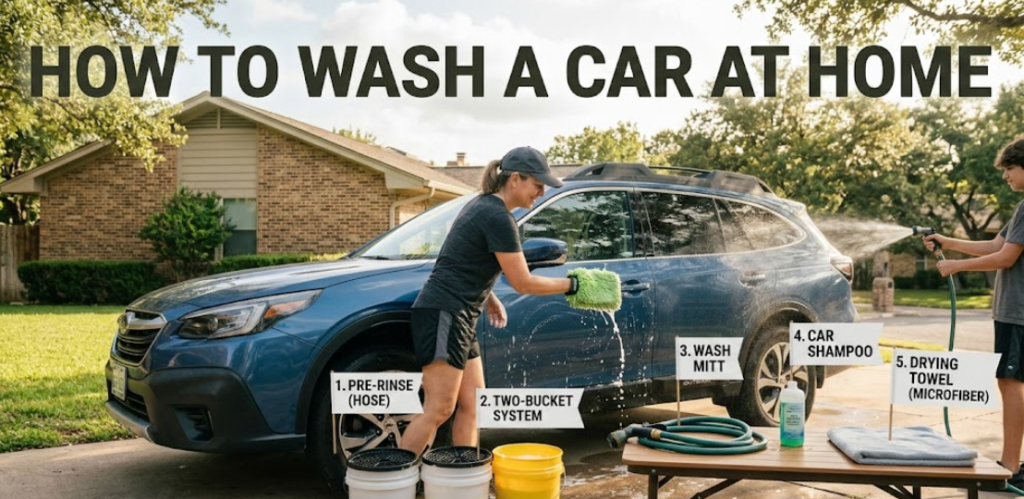
Understanding how to wash a car at home involves using proper tools, safe cleaning products, and organized washing techniques that protect your vehicle’s paint and finish.
Home car washing allows owners to maintain their vehicles regularly while saving money compared to commercial car washes. However, using incorrect materials such as household dish soap or rough brushes can damage the paint surface.
A proper home car wash focuses on gentle cleaning, careful rinsing, and safe drying methods that maintain the vehicle’s appearance while preventing scratches or swirl marks.
Essential Home Car Washing Techniques
• Prepare the Right Car Washing Supplies
Before starting the cleaning process, it is important to gather the appropriate tools and supplies. Professional car detailers recommend using automotive shampoo, microfiber wash mitts, two buckets, soft towels, and a hose with adjustable spray. Automotive shampoos are specifically formulated to remove dirt while protecting the paint’s protective layers. Household cleaning products often contain harsh chemicals that strip wax and damage clear coats. Preparing the right tools in advance makes the washing process more efficient and reduces the risk of damaging the vehicle.
• Rinse the Car Thoroughly Before Washing
The first step when washing a car at home is rinsing the entire vehicle with water. This initial rinse removes loose dirt, dust, and debris that could otherwise scratch the paint during scrubbing. Starting from the top and working downward allows gravity to carry dirt away from already cleaned surfaces. Proper rinsing reduces the risk of swirl marks and prepares the vehicle for the next cleaning step.
• Use the Two-Bucket Washing Method
The two-bucket method is one of the safest techniques for washing vehicles. One bucket contains clean soapy water while the other holds plain rinse water. After each wipe of the car surface, the wash mitt is rinsed in the clean water bucket before returning to the soap bucket. This method prevents dirt from being reintroduced to the paint surface and significantly reduces the risk of scratching.
• Wash the Car From Top to Bottom
Cleaning the vehicle from top to bottom ensures that dirt from lower areas does not contaminate already cleaned surfaces. The roof, windows, and hood should be washed first, followed by doors and side panels. The dirtiest areas—such as wheels and lower bumpers—should be cleaned last because they accumulate the most road debris.
• Clean Wheels and Tires Separately
Wheels often collect brake dust, mud, and road grime that can damage paint if transferred to other areas of the car. For this reason, professional detailers recommend using separate brushes and cleaning products specifically designed for wheels. Cleaning wheels last ensures that brake dust does not contaminate freshly washed body panels.
• Dry the Car Properly After Washing
After rinsing, the car should be dried using soft microfiber towels or drying cloths. Allowing the car to air dry can leave water spots caused by minerals in the water. Proper drying also enhances the shine of the vehicle and prevents streaks.
Also Read:-How to Find Slope – Complete Step-by-Step Math Guide
How to Wash a Car Engine at the Carwash
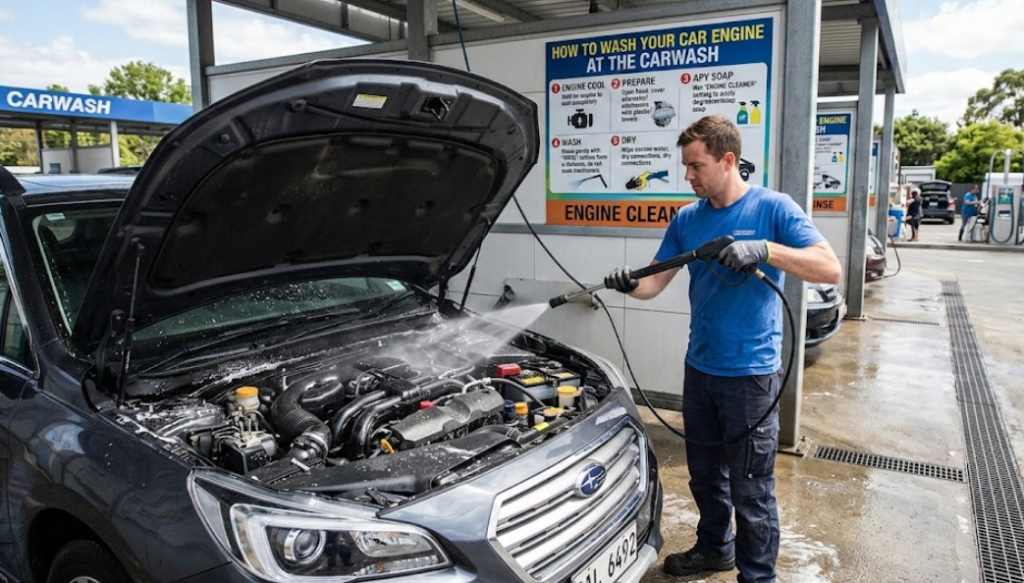
Learning how to wash a car engine at the carwash requires caution and proper preparation because the engine contains electrical components that must be protected from water damage.
Although engine cleaning helps remove grease, oil, and dirt buildup, it should be done carefully using safe methods. Many modern engines contain sealed electrical systems, but excessive water pressure can still cause problems.
Professional detailers often recommend gentle cleaning techniques combined with degreasers designed specifically for automotive engines.
Safe Engine Cleaning Steps
• Allow the Engine to Cool Before Cleaning
Before washing the engine, it is important to ensure the engine has cooled completely. Spraying cold water on a hot engine can cause thermal stress and damage certain components. Waiting until the engine reaches a safe temperature reduces the risk of mechanical damage and ensures safe cleaning conditions.
• Cover Sensitive Electrical Components
Certain engine parts such as battery terminals, air intake systems, and electrical connectors should be covered with protective plastic bags before cleaning. This precaution prevents water from entering sensitive areas and causing electrical issues.
• Apply Engine Degreaser Carefully
Engine degreasers are specially formulated chemicals designed to break down oil and grease buildup. These products should be applied evenly across dirty engine surfaces and allowed to sit for several minutes. The degreaser loosens stubborn grime, making it easier to remove during rinsing.
• Use Low Water Pressure for Rinsing
When rinsing the engine at a carwash, it is important to use low water pressure rather than high-pressure jets. Excessive pressure can force water into electrical connections and mechanical components. Gentle rinsing removes degreaser residue without damaging sensitive parts.
• Use Soft Brushes for Stubborn Dirt
For heavily contaminated areas, soft detailing brushes can be used to gently scrub away grime. These brushes help reach tight spaces between engine components without scratching surfaces.
• Dry the Engine Area Thoroughly
After rinsing, the engine bay should be dried using microfiber towels or compressed air. Proper drying ensures that moisture does not remain in electrical components or hidden areas.
Also Read:- How to Use Lifting Straps: The Complete Expert Guide for Strength and Safety
How to Wash a Car With Ceramic Coating
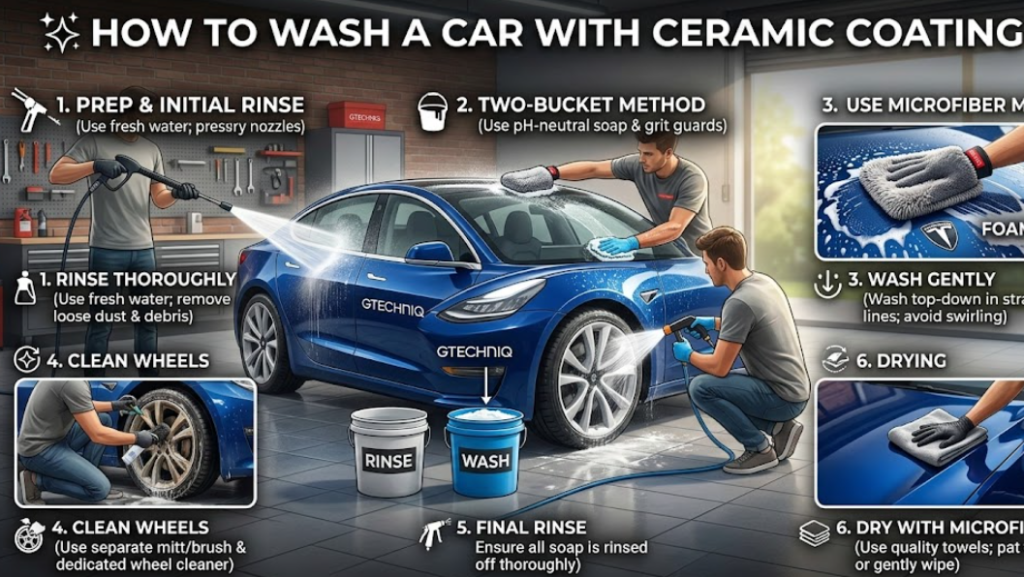
Vehicles protected with Ceramic Coating require specialized washing techniques to preserve the coating’s protective properties.
Ceramic coatings create a hydrophobic layer on the car’s paint that repels water, dirt, and contaminants. However, improper washing techniques can degrade this protective layer over time.
Learning how to wash a car with ceramic coating ensures that the coating continues to protect the vehicle and maintain its glossy finish.
Ceramic Coating Washing Tips
• Use pH-Neutral Car Shampoo
These shampoos remove dirt effectively without degrading the protective coating.
• Avoid Abrasive Cleaning Tools
Abrasive brushes or rough sponges can scratch the coating and damage the paint underneath.
• Rinse Frequently During Washing
Frequent rinsing prevents dirt from accumulating on the wash mitt and scratching the coated surface.
• Avoid Automatic Car Wash Brushes
Automatic car washes often use stiff brushes that may damage ceramic coatings. Hand washing is generally safer for coated vehicles.
• Dry the Vehicle Using Microfiber Towels
Soft microfiber towels help maintain the coating’s smooth finish while preventing water spots.
Also Read:- How to Store Peaches: The Complete Freshness & Ripening Guide
How to Wash a Car Properly
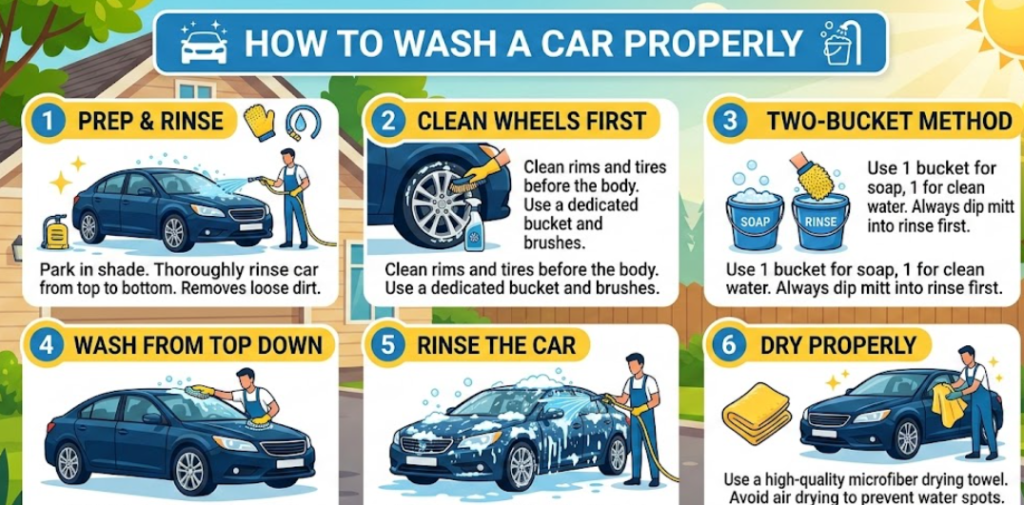
Understanding how to wash a car properly involves combining all best practices used by professional detailers to clean a vehicle safely and effectively.
Proper car washing protects the vehicle’s paint, improves appearance, and helps maintain resale value.
Following structured cleaning procedures ensures that dirt is removed without damaging delicate paint surfaces.
Professional Car Washing Best Practices
• Choose the Right Location for Washing
Washing the car in a shaded area prevents water and soap from drying too quickly on the paint. Direct sunlight can cause water spots and soap streaks.
• Use High-Quality Microfiber Towels
Microfiber towels are designed to trap dirt particles and prevent scratches. They are widely recommended by professional detailers.
• Rinse the Car Frequently During Washing
Frequent rinsing prevents soap and dirt from drying on the paint surface.
• Protect the Paint With Wax or Sealant
Applying wax or paint sealant after washing adds an additional protective layer against environmental damage.
• Clean Windows and Mirrors Last
Glass surfaces should be cleaned last using dedicated glass cleaners to avoid streaks.
• Inspect the Car After Washing
After drying, inspect the vehicle for missed spots or remaining contaminants.
Also Read:- How to Start Composting – The Ultimate Beginner’s Guide
Conclusion
Learning how to wash a car correctly helps maintain both the appearance and durability of your vehicle. Proper washing techniques protect the paint, reduce environmental damage, and extend the life of protective coatings.
By following professional methods—such as using the two-bucket system, selecting safe cleaning products, and drying the vehicle carefully—car owners can achieve professional-level results at home.
Regular cleaning combined with proper maintenance ensures your vehicle remains clean, protected, and visually appealing for years to come.
FAQs
How often should you wash your car?
Most experts recommend washing your car every two weeks, depending on driving conditions.
Can dish soap damage car paint?
Yes, dish soap can strip protective wax layers and should not be used for regular car washing.
Is pressure washing safe for cars?
Pressure washing is safe when done carefully with moderate pressure and proper distance.
What is the safest way to dry a car?
Using clean microfiber towels or dedicated drying cloths is the safest method.
For More Visit guideitfast.com