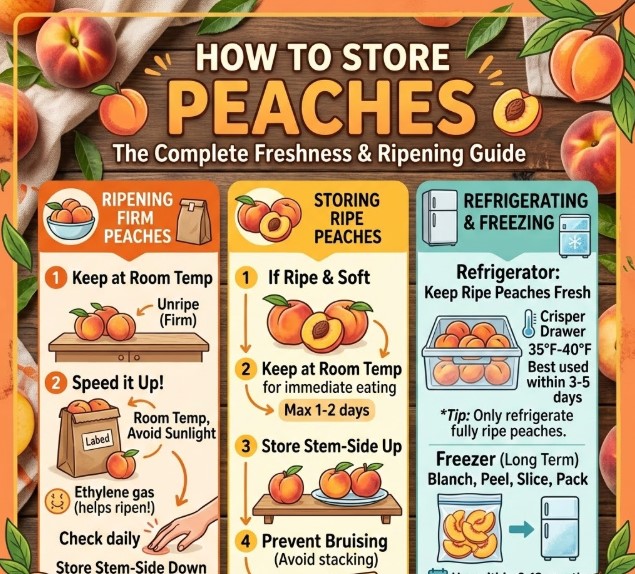
If you’ve ever brought home a basket of fragrant, sun-ripened peaches, you know how delicate they can be. Learning how to store peaches properly is essential to preserve their sweetness, texture, and nutritional value. Whether you’re figuring out how to store peaches at home, how to store peaches in fridge safely, how to store peaches long term, or even how to store peaches to ripen naturally, the right technique makes all the difference.
Peaches are climacteric fruits, meaning they continue ripening after harvest due to ethylene production. According to post-harvest handling guidance from the United States Department of Agriculture, proper temperature and humidity control dramatically extend fruit shelf life. Similarly, research supported by University of California Agriculture and Natural Resources highlights how improper refrigeration timing can reduce flavor quality in stone fruits.
Understanding Peach Ripening and Storage Basics
Before discussing how to store peaches, it’s important to understand how peaches ripen and why storage temperature matters.
Peaches produce ethylene gas, a natural plant hormone that triggers softening, sugar development, and aroma production. Temperature influences this process dramatically. Too cold too early, and the fruit becomes mealy. Too warm too long, and it overripens quickly.
Why Proper Storage Matters
• Preserves Flavor and Sweetness
When peaches ripen at the correct pace, natural sugars concentrate, enhancing their signature sweetness. Improper storage — especially premature refrigeration — can halt sugar development. Understanding how to store peaches ensures optimal taste.
• Maintains Juicy Texture
Peaches are prized for their tender, juicy flesh. Exposure to low temperatures before full ripeness can cause “chilling injury,” resulting in dry or grainy texture. Correct storage protects moisture balance.
• Extends Shelf Life Naturally
Room-temperature ripening followed by controlled refrigeration can extend usability by several days. This is especially helpful when buying peaches in bulk.
• Reduces Food Waste
The Food and Agriculture Organization of the United Nations estimates significant global food waste occurs due to improper storage. Learning how to store peaches properly helps minimize spoilage at home.
• Protects Nutritional Value
Peaches contain vitamin C, fiber, and antioxidants. Gentle storage conditions maintain these nutrients.
• Improves Meal Planning Flexibility
Correctly stored peaches allow you to schedule baking, grilling, or preserving without rushing against spoilage.
Also Read:- How to Start Composting – The Ultimate Beginner’s Guide
How to Store Peaches at Home (Room Temperature Method)
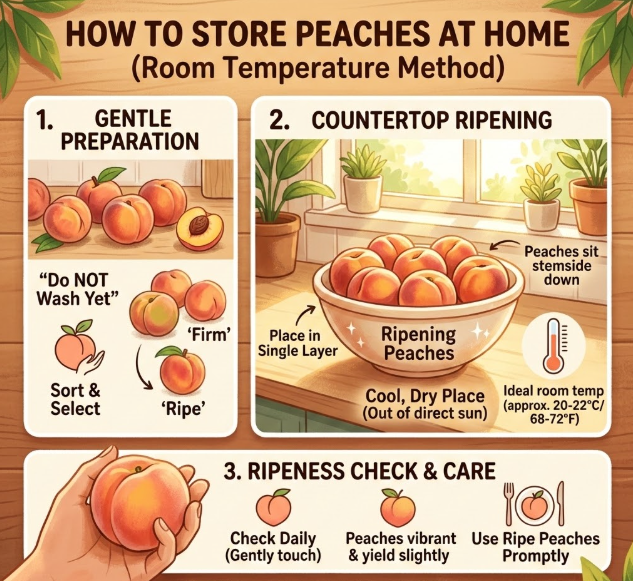
When peaches are firm and not yet ripe, storing them at room temperature is best.
Best Practices for Storing Peaches at Home
• Keep Peaches Unwashed Until Use
Moisture accelerates spoilage. Leave peaches dry until ready to eat or cook. Washing too early encourages mold growth.
• Place Stem-Side Down on Counter
Positioning peaches stem-side down reduces bruising and distributes weight evenly, preserving delicate flesh.
• Allow Air Circulation
Spread peaches in a single layer on a countertop or shallow bowl. Avoid stacking, as pressure causes bruising.
• Keep Away from Direct Sunlight
Warmth speeds ripening, but direct sun can cause uneven softening. Choose a cool kitchen area.
• Check Daily for Ripeness
Gently press near the stem. Slight softness indicates readiness. Once ripe, transition to refrigerator storage.
• Separate from Ethylene-Sensitive Produce
Peaches emit ethylene gas. Keep them away from leafy greens to prevent premature spoilage.
Also Read:- How to Type Degree Symbol (°) on Any Device – Complete Guide
How to Store Peaches to Ripen Faster

Sometimes peaches are harvested slightly underripe.
Speeding Up the Ripening Process
• Use a Paper Bag Technique
Place peaches in a paper bag to trap ethylene gas, accelerating ripening naturally.
• Add a Banana or Apple
These fruits emit additional ethylene, boosting ripening speed.
• Avoid Plastic Bags
Plastic traps moisture rather than gas exchange, increasing mold risk.
• Monitor Softness Frequently
Ripening can happen within 24–48 hours using this method.
• Do Not Refrigerate Before Ripening
Cold temperatures halt ripening enzymes.
• Remove Once Slightly Soft
Transfer to refrigerator once peak ripeness is reached.
Also Read:- How to Make Obsidian in Minecraft: The Complete Expert Guide
How to Store Peaches in Fridge (Short-Term Freshness)
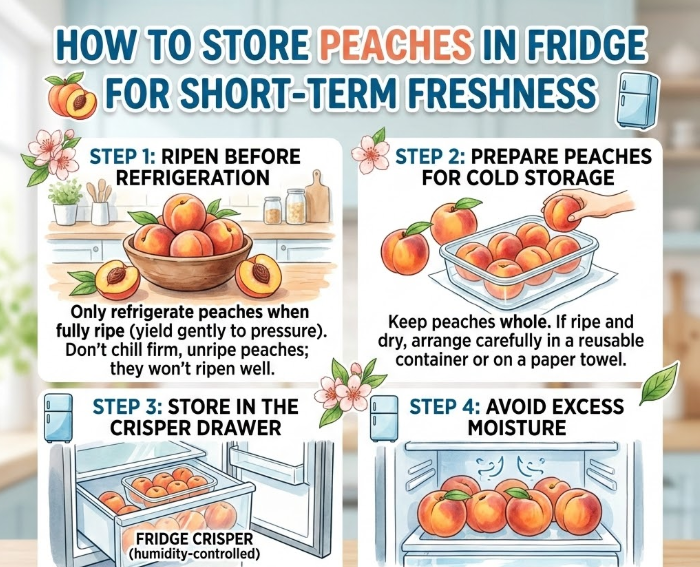
Once ripe, refrigeration slows further softening.
Proper Refrigerator Storage Steps
• Place in Crisper Drawer
Humidity-controlled drawers help maintain moisture balance.
• Store in Perforated Plastic Bag
Light airflow prevents condensation buildup.
• Avoid Crowding
Crowded peaches bruise easily and deteriorate faster.
• Keep Temperature Around 32–40°F
This range slows spoilage without freezing tissue.
• Consume Within 3–5 Days
Refrigeration extends life briefly but not indefinitely.
• Bring to Room Temperature Before Serving
Chilled peaches taste less sweet. Let them sit 30 minutes before eating.
Also Read:- How to Dice an Onion: The Complete Step-by-Step Kitchen Guide
How to Store Peaches in Refrigerator vs. Fridge: Is There a Difference?
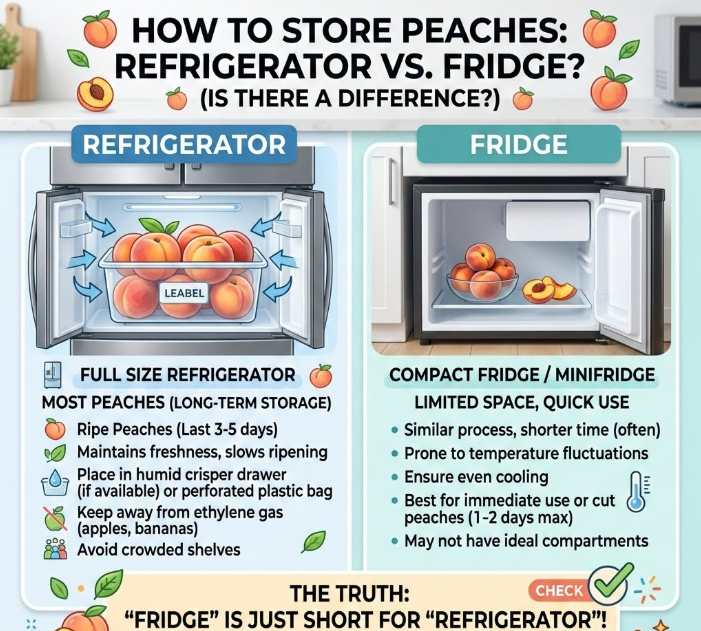
The terms “fridge” and “refrigerator” are interchangeable. However, placement within the appliance matters.
Optimal Refrigerator Placement
• Use the Crisper Drawer for Humidity Control
Most refrigerators include adjustable humidity settings ideal for fruit.
• Avoid Back Wall Contact
Peaches touching the coldest wall may develop chilling injury.
• Separate from Strong Odors
Peaches absorb surrounding smells easily.
• Keep Away from Raw Meats
Prevent cross-contamination risks.
• Maintain Clean Storage Area
Spores from other spoiled produce spread quickly.
• Monitor Regularly for Overripeness
Even refrigerated peaches continue softening slowly.
Also Read:- How to Ripen Avocados: Complete Guide for Perfectly Ripe Fruit
How to Store Peaches Long Term (Freezing & Preserving)
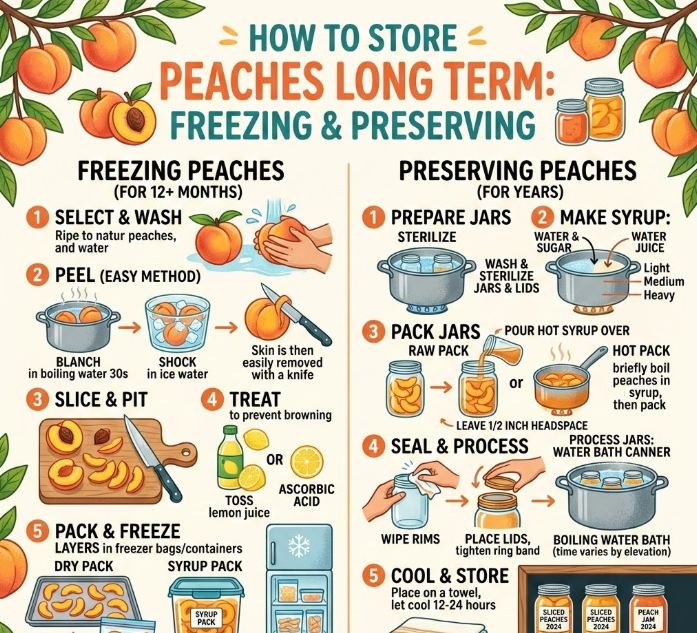
For extended storage beyond one week, freezing is ideal.
Long-Term Peach Storage Methods
• Peel and Slice Before Freezing
Blanch peaches briefly to remove skins easily.
• Toss in Lemon Juice
Prevents browning due to oxidation.
• Flash Freeze on Baking Sheet
Pre-freezing prevents slices from sticking together.
• Transfer to Airtight Containers
Use freezer-safe bags to prevent freezer burn.
• Label with Date
Frozen peaches maintain quality up to 8–12 months.
• Consider Canning for Pantry Storage
Properly canned peaches last over a year when sealed safely.
Guidelines from the National Center for Home Food Preservation provide detailed safe canning recommendations.
Also Read:- How to Fix WiFi: The Complete Step-by-Step Troubleshooting Guide
How to Store Peaches and Nectarines Together
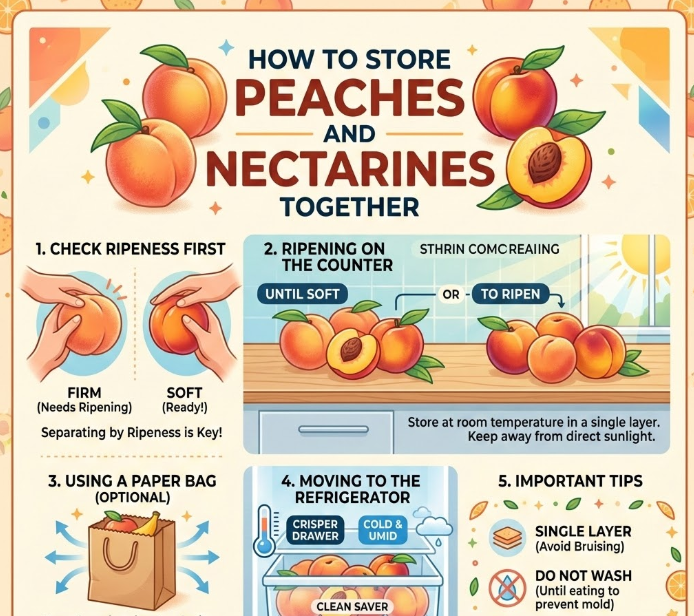
Peaches and nectarines are both stone fruits with similar storage needs.
Combined Storage Strategies
• Treat Both as Climacteric Fruits
Both continue ripening after harvest.
• Ripen at Room Temperature First
Avoid refrigeration until slightly soft.
• Store Separately if One Ripens Faster
Monitor each fruit individually.
• Handle Gently to Prevent Bruising
Nectarines have smooth skin but bruise easily.
• Use Same Freezing Methods
Preparation techniques apply to both fruits.
• Plan Recipes Accordingly
Both fruits work in pies, cobblers, smoothies, and preserves.
Also Read:- How to Take Care of Mums: The Complete Expert Guide to Healthy, Long-Lasting Blooms
Conclusion
Learning how to store peaches properly ensures you enjoy their peak sweetness, texture, and nutrition. Whether you’re storing peaches at home to ripen, placing them in the fridge for short-term use, or freezing them for long-term preservation, the key is timing and temperature control.
Let peaches ripen naturally at room temperature. Refrigerate only once ripe. Freeze for extended storage. And always handle gently to avoid bruising.
With these expert-backed strategies, your peaches — and nectarines — will stay fresh, juicy, and delicious far longer.
FAQs
Should peaches be refrigerated immediately after purchase?
No. Let them ripen at room temperature first unless already soft.
How long do peaches last in the fridge?
Typically 3–5 days once ripe.
Can I freeze whole peaches?
Yes, but slicing and removing pits improves quality.
Why do refrigerated peaches taste bland?
Cold temperatures can suppress aroma compounds temporarily.
Can peaches ripen after refrigeration?
Ripening slows significantly once chilled.
For More Visit guideitfast.com