
Cleaning a pizza stone correctly is one of the most misunderstood kitchen skills, yet it directly affects flavor, hygiene, and the lifespan of your stone. If you’ve ever wondered how to clean a pizza stone without cracking it, ruining its seasoning, or trapping soapy residue inside its porous surface, you’re not alone. Many home cooks make the mistake of treating a pizza stone like a metal pan—only to end up with bitter-tasting pizzas or a permanently damaged stone.
A pizza stone is designed to absorb moisture and withstand extremely high temperatures. That same porosity that makes it ideal for crispy pizza crusts also means it must be cleaned with care. This guide combines hands-on experience, food safety best practices, and manufacturer-approved methods to give you a complete, trustworthy answer to how to clean a pizza stone properly—whether it’s blackened, covered in burnt-on food, or freshly used.
Throughout this article, you’ll learn safe techniques, what to avoid, and why stains are not always a bad thing. We’ll also cover practical variations for different cleaning situations so you can confidently maintain your pizza stone for years.
Understanding Pizza Stones Before Cleaning
A pizza stone is typically made from ceramic, cordierite, or composite stone materials. These materials are engineered to retain heat evenly and absorb excess moisture from dough, which is why pizza stones deliver restaurant-quality crusts at home. However, this same structure makes them highly absorbent and sensitive to moisture changes.
Unlike nonstick cookware, pizza stones should never be submerged in water, scrubbed with soap, or placed in a dishwasher. Soap molecules and excess moisture can seep deep into the stone and later release unpleasant flavors when reheated. Sudden temperature changes can also cause cracking, making gentle, informed cleaning essential.
Understanding this foundation helps explain why the best way to clean a pizza stone often looks very different from traditional kitchen cleaning methods.
How to Clean a Pizza Stone That Is Black
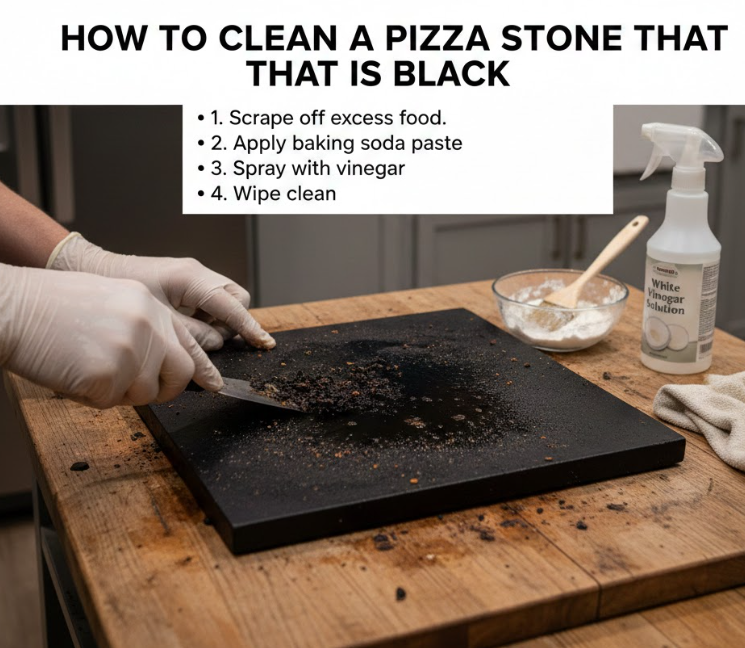
A blackened pizza stone is not necessarily a dirty pizza stone. In fact, dark discoloration is usually a sign of seasoning—similar to cast iron—and indicates repeated exposure to high heat and food oils.
Why Pizza Stones Turn Black
Over time, oils, flour, and food particles bake into the stone at high temperatures. This creates carbonized stains that darken the surface. These stains do not mean the stone is unsafe; they are often permanent and harmless.
Safe Cleaning Method for a Black Pizza Stone
• Allow the stone to cool completely
Never attempt to clean a hot or warm pizza stone. Sudden temperature changes can cause internal fractures that weaken the stone permanently.
• Scrape off loose debris gently
Use a plastic scraper or wooden spatula to remove baked-on food. Avoid metal tools that can gouge the surface and create weak points.
• Use dry brushing instead of water
A stiff nylon brush or dry scouring pad is ideal for lifting surface residue without soaking the stone.
• Accept cosmetic stains as normal
Black coloration does not affect performance. Attempting to bleach or whiten a stone often does more harm than good.
• Reheat to sanitize naturally
High heat (450–500°F / 230–260°C) naturally kills bacteria. Simply reheating the stone during cooking effectively sanitizes it.
• Avoid aggressive chemicals
Bleach, vinegar, or commercial degreasers can break down the stone’s structure and leave behind harmful residues.
Expert Tip: According to food safety guidelines, heat is a more effective sanitizer for porous cooking surfaces than chemical cleaners.
Also Read:- How to Water Succulents: Essential Techniques for Healthy Plants
How to Clean a Pizza Stone With Burnt-On Food
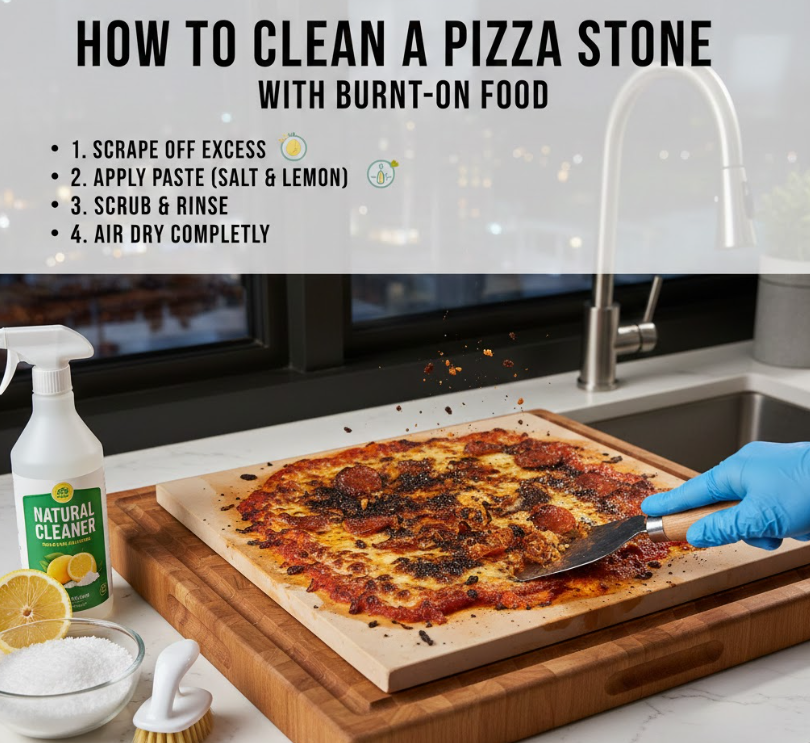
Burnt-on food is one of the most common reasons people search for how to clean a pizza stone. The key is patience and dry methods rather than force or soaking.
Step-by-Step Burnt-On Food Removal
• Cool the stone completely
Cleaning while warm increases the risk of cracking and makes food stick more firmly.
• Scrape in layers, not all at once
Work gradually, loosening small bits of food rather than forcing large chunks free.
• Use minimal water only if necessary
If dry scraping fails, lightly dampen a cloth—never pour water directly onto the stone.
• Avoid soap at all costs
Soap penetrates the stone and releases unpleasant flavors when heated.
• Air-dry for at least 24 hours
Any moisture trapped inside must evaporate fully before reheating.
• Re-season through baking
Bake the stone empty at high heat to restore performance and eliminate residual odors.
Why Burnt Food Happens
Burnt food typically results from excess flour, sugary toppings, or cheese overflow. Using parchment paper or a light cornmeal dusting can reduce future buildup.
How to Clean a Pizza Stone After Use
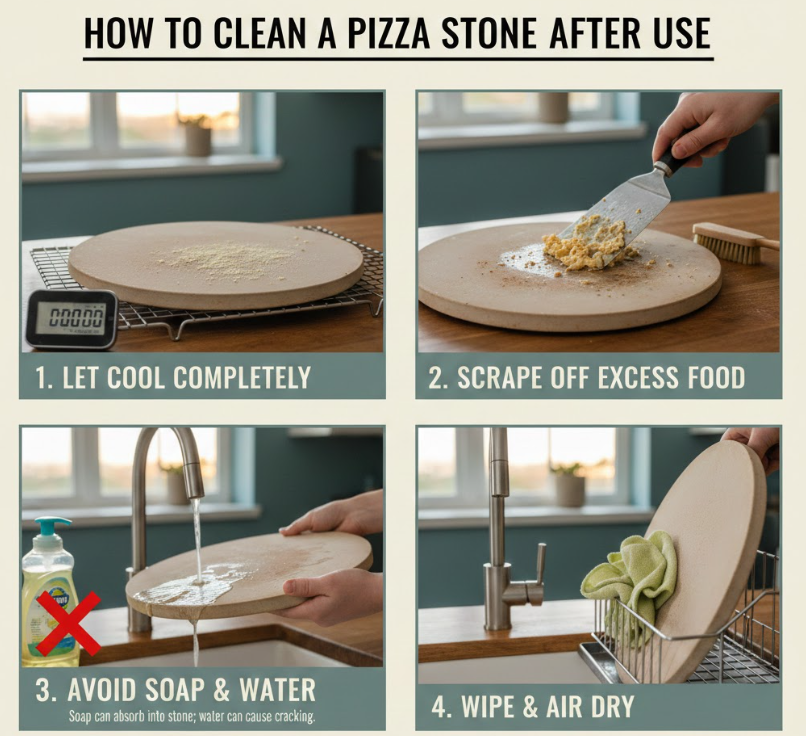
Cleaning a pizza stone after each use doesn’t mean deep cleaning every time. In most cases, minimal maintenance is better than aggressive cleaning.
Post-Use Cleaning Best Practices
• Let the stone cool inside the oven
Gradual cooling prevents thermal shock and cracking.
• Remove crumbs with a dry brush
Loose debris should be brushed off before it hardens.
• Spot clean only when needed
Target problem areas instead of scrubbing the entire surface.
• Never oil the stone after use
Unlike cast iron, pizza stones do not need post-use oiling.
• Store in a dry place
Humidity can weaken the stone over time.
• Use heat as your primary sanitizer
Regular baking at high temperatures naturally keeps the stone safe and clean.
Routine care preserves both performance and structure, making future cleanings easier.
How to Clean a Pizza Stone With Baking Soda
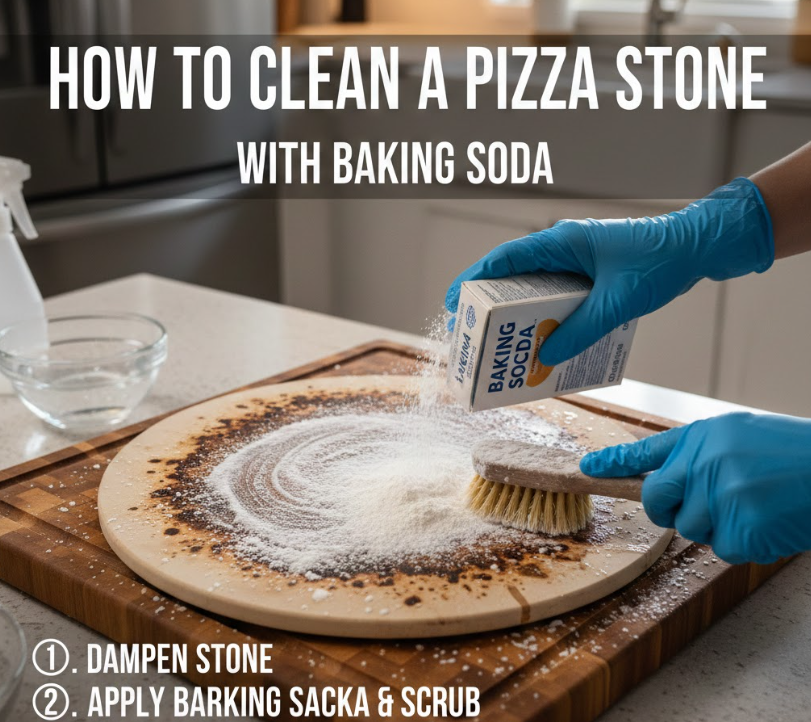
Baking soda is one of the few substances considered safe for deeper pizza stone cleaning when used correctly.
Why Baking Soda Works
Baking soda is mildly abrasive and alkaline, making it effective at loosening stubborn residues without harsh chemicals. Unlike soap, it does not leave behind lingering flavors when fully removed.
Baking Soda Cleaning Method
• Create a thick paste
Mix baking soda with a small amount of water—just enough to form a paste.
• Apply only to stained areas
Avoid coating the entire stone unnecessarily.
• Scrub gently with a soft brush
Use circular motions without excessive pressure.
• Wipe with a barely damp cloth
Remove residue carefully without soaking the stone.
• Air-dry for a full day
This step is critical to prevent cracking during reheating.
• Reheat gradually before use
Place the stone in a cold oven and allow it to heat slowly.
When to Avoid Baking Soda
If your stone has hairline cracks or structural damage, even gentle moisture exposure can worsen the problem.
Common Mistakes to Avoid When Cleaning a Pizza Stone
Many pizza stones fail early due to preventable mistakes rather than normal wear.
• Using dish soap or detergent
• Submerging the stone in water
• Placing it in the dishwasher
• Using metal scrapers aggressively
• Heating a damp stone
• Attempting to “restore” color with chemicals
Avoiding these errors preserves both safety and flavor quality.
Conclusion: The Smart Way to Clean a Pizza Stone
Learning how to clean a pizza stone properly is about restraint, not force. A pizza stone is designed to endure heat, not water or chemicals. Black stains, baked-on marks, and discoloration are signs of use—not failure. By relying on dry scraping, minimal moisture, gentle abrasives like baking soda, and heat sanitization, you protect both flavor and structure.
When treated correctly, a pizza stone can last for many years, delivering crisp crusts and consistent performance. Clean less aggressively, heat more intentionally, and let the stone do what it was designed to do.
FAQs: How to Clean a Pizza Stone
Can I use vinegar on a pizza stone?
No. Vinegar is acidic and can weaken the stone while leaving absorbed odors.
Is a black pizza stone safe to use?
Yes. Blackening is normal and does not affect food safety.
How often should I deep clean a pizza stone?
Only when heavy buildup occurs. Routine scraping is usually enough.
Can I wash a pizza stone with water?
Minimal water is acceptable, but soaking is not.
Why does my pizza taste bitter?
This often indicates soap residue trapped in the stone.
For More Visit guideitfast.com